Author: symeo

Eels, Live at the Aladdin

I’ve said it before, and I’ll say it again: it’s always a good idea to see Eels live.  Their reputation may not suggest it (singing a lot of bitter and sardonic ballads certainly helps contribute to a certain impression otherwise), but the band is usually guaranteed to turn in a memorable performance.  Steve Perry didn’t show up Sunday night, but the crowd definitely had a great time nonetheless.

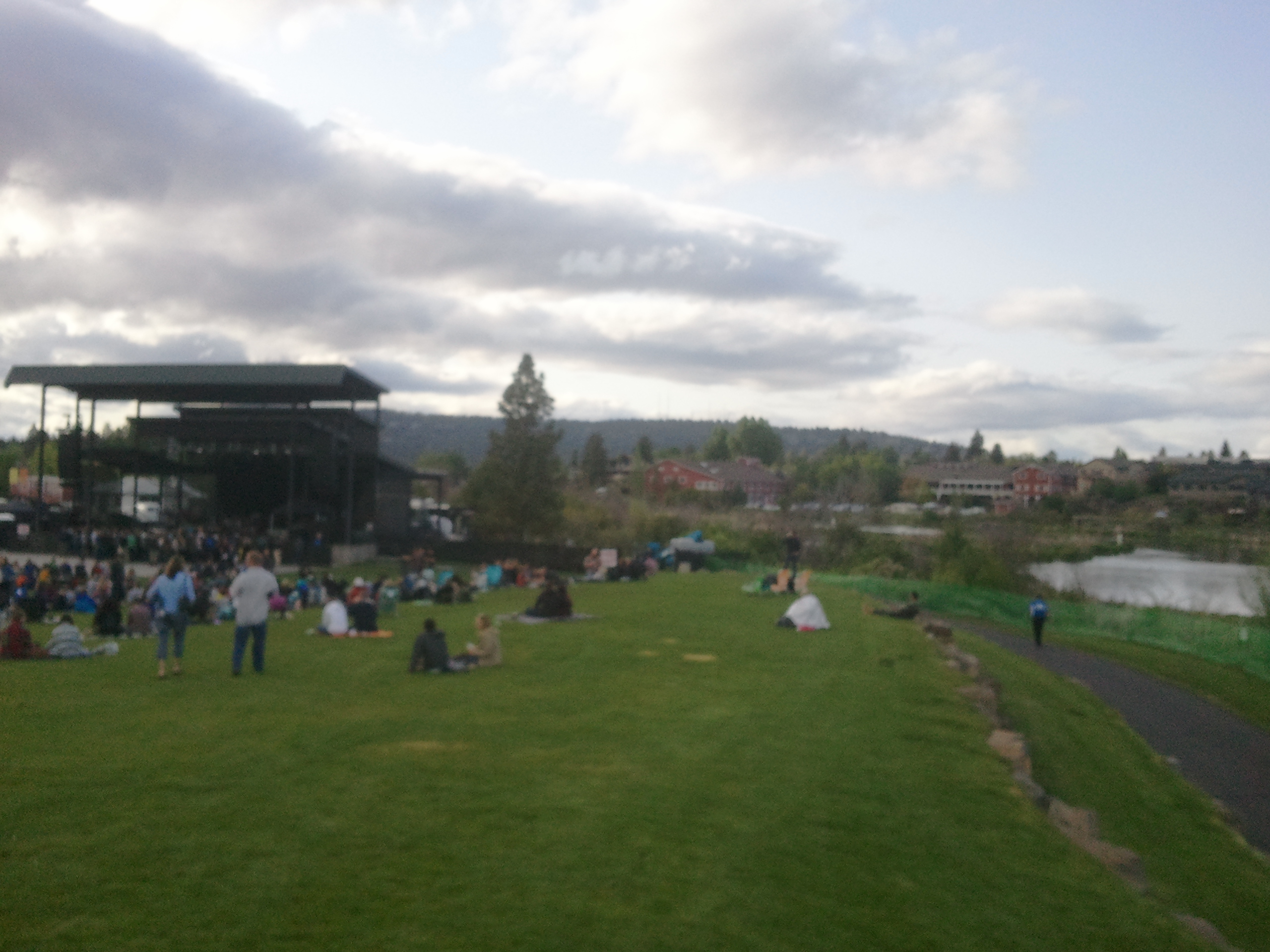
It's summer, evening shows are starting when it's still light out

It’s summer, evening shows are starting when it’s still light out

In previous years, we had seen the band perform with a string quartet, feature a documentary about E’s physicist father and answer letters from fans, and create a retro-themed variety show.  This time around, the band ditched the matching track suits (and full beards) from the Wonderful, Glorious tour for more serious attire, fitting the mood of the band’s melancholic and reflective new album, The Cautionary Tales of Mark Oliver Everett.  It took a few songs before I settled on an appropriate descriptor, but an offhand comment by E realized that the suit-and-tie ensembles gave the group the look of a serious jazz quintet.  The comparison fit, because while several songs were a bit slower and more introspective, the band was still able to rev it up when the tune required it.

The show began with the instrumental opener of Cautionary Tales, which segued into a delicate cover of the old classic “When You Wish Upon A Star”.  The early songs were a mix of material from the new album and the Hombre Lobo/End Times/Tomorrow Morning trilogy, a batch that E remarked was full of “downers”, but were appropriately received by the audience nonetheless.  E kept the mood light with quips like that, asking the audience to forgive him for not behaving like a rock star and blowing his nose in a break between songs due to a cold, and informing the crowd that Portland folks welcomed him with a nice bag of cocaine, and that it should kick in any minute.  E never gets enough credit from the press for his humor and his willingness to engage the audience, but the crowd certainly appreciated it.
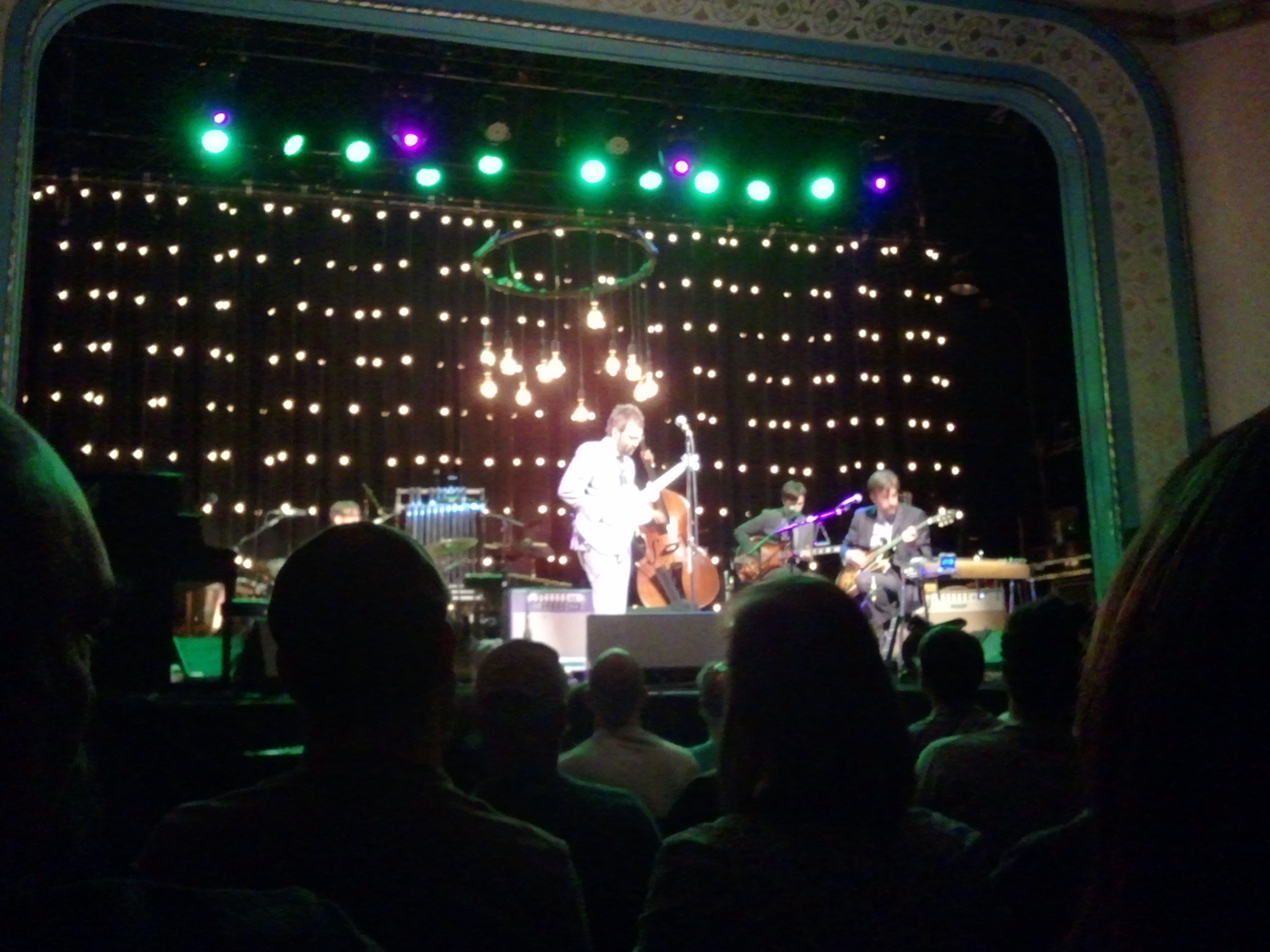
The band in their snazzy attire

The band in their snazzy attire

The pace would pick up when the band dipped into old favorites, like “Grace Kelly Blues”, “I Like Birds”, and “My Beloved Monster”.  The band was in fine form, and the fact that it was the same lineup from the Wonderful, Glorious tour probably helped the cohesiveness, as they effortlessly switched instruments and altered the arrangements.  It was a homecoming for three of the four backing members, as The Chet (guitars, pedal steel, melodica), Honest Al (upright bass), and Knuckles (drums/percussion, or “the yard sale back there”, as E joked) were all from the PDX area, and perhaps they were inspired by playing in front of a hometown crowd.  But the quality of the band and it’s always changing dynamic helps emphasize another great point of catching Eels live, and that’s that the band is always willing to alter a song or approach it from a new angle.  This was most commonly seen with their attempts to make “Novocaine for the Soul” fresh after playing it thousands of times, but on Sunday it was seen in reworkings of great songs like “Fresh Feelings” or “Last Stop: This Town”, both of which kept the spirit of the original versions but were intriguing new takes of the songs.

After a false encore, where E ran into the crowd and hugged audience members, and after a real encore break, the band ended with a beautifully sublime “3 Speed” and two excellent covers, an elegant rendition of “Can’t Help Falling In Love With You” and a gorgeous version of Harry Nilsson’s “Turn On Your Radio”.  The band then exited to a standing ovation, and the crowd was left hoping that the band would return soon, and wondering what they have next in store (even twenty years after their debut).
Over the Weekend (June 9 Edition)

Let’s kick off the week with some fun videos and some new music, shall we?

Probably the best thing that I saw this weekend (aside from the news that Bill Watterson made a surprise return to the comics page) was this video of Sir Mix-a-Lot performing his classic hit “Baby Got Back” with the Seattle Symphony.  The last time we saw this kind of synergy between the classical music and hip-hop worlds was back at the ’96 Hullabalooza Festival, when the London Symphony Orchestra performed “Insane in the Brain” with Cypress Hill.

It’s definitely worth checking out the Oral History of the song as well.

That was not the only salacious thing to happen this weekend–it appears that Neil Young’s Twitter account was hacked, and followers ended up receiving a bunch of porn suggestions.  Apparently, all is well now, so you’ll need to check in with another classic rock legend for your porn fix (as a commenter pointed out, David Crosby would probably be a great bet).

The biggest news from this morning (or late last night, if you were up) was the surprise release of the first half of the new double-LP from Death Grips, the powers that b (though they do have a penchant for this sort of thing).  It’s available for free from their Facebook, and after a couple of listens this afternoon, I can say it’s actually a less-rambunctious release than you might expect (I do love that the automatic genre tag that appears when you load into iTunes is “Pop”, though).  And you’ll see a lot of mention that Björk does guest vocals on each track, though her appearance shouldn’t be that much of a surprise.

A couple of links to check out from NPR–first, there’s Spoon performing the brand new track “Rent I Pay” live in New York; and speaking of New York, they also have the early stream of Familiars from NYC’s The Antlers.  In the email sent to fans about the stream, The Antlers mentioned that there will be limited edition white label copies of the LP available at some of the band’s favorite independent record stores.

Pitchfork has Father John Misty performing a cover of recent Rock and Roll Hall of Fame inductee Cat Stevens’s “Trouble”, released as part of the soundtrack to a documentary on Hal Ashby.  The site also has news that Steven Drozd and Wayne Coyne of the Flaming Lips are releasing an album as “Electric Würms”, with Steven assuming more traditional front-man duties and Wayne backing on bass.

And finally, because we’re always fans of what our favorite Portland heavy metal band is up to, check out Red Fang discussing their influences in this interview with Loudwire.  A few of their choices may surprise you.

Catching Up On The Week (June 6 Edition)

Lots of news and profiles and interviews for a weekend of #longreads.

Interpol announced that they will be releasing their new album entitled El Pintor this fall, on September 9.  If you’re wondering about the name, yes, it is Spanish (for “the painter”), but if you look closely, you should realize it’s an anagram of the band’s name (the stunning cover art helps a little bit in making the connection).  It appears they haven’t officially replaced departed bassist Carlos D, as Paul Banks assumed bass duties for the album in addition to his vocal and guitar work.

We finally got official word that the new Spoon album will be released on August 5, and it’s to be called They Want My Soul.  We’re still not exactly sure what the “R.I.P. June 10” business is quite yet, but it makes sense considering the album title.  Check out this great interview that the band did with NPR.

If you didn’t get your fill of Soundgarden from our Feats of Strength analysis this week, be sure to check out these interviews with the band.  At Ultimate Guitar the band answered questions from fans covering a lot of the technical details of their playing, and at Consequence of Sound there’s a retrospective about the production of Superunknown that’s fairly illuminating.  And if that’s not enough, SPIN has an extensive oral history that looks at the making of the landmark album.

AV Club takes a look at Travis’s The Man Who for their Permanent Records feature through the lens of their influence on Coldplay, while making a case for the album on its own merits.  I have long been a fan of that album, not just for their adolescence-ready lyrical themes (is there a more universal sentiment than wondering at some point “why does it always rain on me?”), but also for some gorgeous guitar work.  The solo in “As You Are” has to rank among the high points of music in 1999, not necessarily for its technical merits but for its ability to capture the emotional climax of the song.

This week saw some big new album releases for indie rock, and we’ll be working our way through reviews soon, but in the mean time you can look at multiple interviews with Parquet Courts, one with the New York Times and another with Stereogum, and if you’re looking to get into the post-hardcore sound of Fucked Up but are not quite sure you’re ready for it, Stereogum’s top ten should provide a useful guide.

As I’ve said before, 1994 was a huge year in music, so there’s going to be a ton of retrospectives this year.  This week, the eyes of nostalgia turn to Stone Temple Pilots, as Stereogum celebrates the release of Purple, probably their best album (though contrary to their claim, the band never was and never will be better than Pearl Jam; let’s just acknowledge STP was better than their detractors claim and move on).

And finally, since the weather seems to have officially changed into summer, now’s the perfect time to check out this look back at the beginning of Warren G’s career and his influence on the rise of G-Funk, courtesy of Pitchfork.

The Coldplay Dilemma

According to the rushed pace of the standard Internet cycle, it’s probably more than a little late to the game to do an in-depth discussion on Coldplay at this point.  I mean, their new album came out nearly a month ago!  Even if you were interested in reading a thinkpiece on the band, you probably have had your fill weeks ago.  You’re probably even less inclined than usual to read a semi-glorified album review for something that you could have listened to multiple times already.

Of course, these are issues separate from the fact that it’s Coldplay that would be the subject of analysis.  The mere mention of their name is enough to get Internet Folk riled up to offer their witty take, usually a negative one at that.  Then again, I’m not the first person to acknowledge this fact, as most pieces on Coldplay are offered from some sort of an apologist’s perspective.  So I’m just going to lay my cards on the table: I’m a Coldplay fan.  As I’ve put it before, “That’s right: I have opinions on Coldplay b-sides.”

That’s a pretty great b-side.  See also “See You Soon” and “Careful Where You Stand”.

Now here’s where we go over all the caveats.  I’m a fan in the sense that I will buy each of their albums as they’re released, but there’s no guarantee that I will continue to listen to them as the years go by (in fact, it’s been several years since I’ve listened to X&Y, and I’ve made it a point to specifically not-listen to that album over the years–the play count on my iTunes for that album remains at zero, and you can go back three laptops and find that to be the case).  I’m a fan in that I will occasionally offer a defense of their musicianship or some of their works, but I’m not one to go out of my way to convince people.  I’m not exactly the zealous advocate that Coldplay may require.

I still listen to their first two albums fairly regularly, and I would argue that Parachutes and A Rush of Blood to the Head are two of the best albums of the 00’s.  It’s striking that often you will find that many of Coldplay’s detractors will concede that there are at least a couple of good songs on those albums; what’s even more impressive is that there isn’t a general consensus on what those specific songs are, and if you add the vote totals up for each song, you would end up with votes for half of each album.  “Shiver” or “Don’t Panic”, “Everything’s Not Lost” or “Spies”?  “The Scientist” or “Amsterdam”? ,”Clocks” or “Politik”?  It’s easy to make a case for any of these songs (except for “Yellow”, which was of course their first breakthrough hit–I won’t stand for any argument for it, and it’s the one area where I’ll agree with the detractors.  Go figure).

Once A Rush of Blood to the Head made Coldplay the biggest band in the world however, it would undercut the identity that gave them their success in the first place: that they were the underdog.  It’s hard to believe the person singing a lyric like “So I look in your direction, but you pay me no attention” from “Shiver” when he’s married to Gwyneth Paltrow, or that the frontman of the best-selling band on the planet would be contemplating suicide, as in “Amsterdam”.  They were no longer the plucky underdog, they were not the confident favorite.  This would even box the band in musically, as they built their reputation on more intimate, simple songs.  Even when they would explode with emotion, there was still an element of restraint.  Sure there are big and brash pounding chords on “Politik”, but they resolve to a delicate conclusion by the end (pay close attention to the subtle melody that overlays the chords, that is the true movement in the song).

X&Y is the sound of a band spinning its wheels as it realizes it has these issues.  Luckily, the group realized that from an artistic perspective, that it needed a change in focus (they never would have a problem from a commercial perspective–X&Y opened up at #1, as they would for the rest of their career).  The band realized that they needed to alter their style, and hiring Brian Eno was a great way to start.  That’s why Viva la Vida works much better as an album–they realize their place, but they also realize that now they can indulge in more adventurous musical experimentation.  Mylo Xyloto was conceived similarly, except any subtlety was brushed aside in favor of amplification of all their traits, good and bad.  It’s still better than X&Y, but it would take a conscious effort on my part to seek out (most of the time I forget the album even exists, honestly).

Sadly, with the recent turmoil in Chris Martin’s personal life, the band could conceivably claim the mantle of their earlier albums.  Musically, it makes sense as well–after a couple of albums of experimentation, the time is ripe to return to the original formula and make more intimate songs.  Ghost Stories does that, but in the process it seems to miss out on the strengths of those early albums.  Guitars are generally discarded and drums are programmed, with only the bass given much of anything to do.  By de-emphasizing their instrumental strengths, it often has the aura of being a Chris Martin solo album more than a Coldplay album.  This was a band that had an underrated guitarist that would use novel chords, provide incisive leads, and had a complete mastery of tone, and a group that had a drummer that had a wonderful rhythmic sense and had great control over both powerful hits and subtle flourishes.

Despite these flaws, Ghost Stories does have its merits, and at least shows that the band is still willing to engage in musical left turns (the multi-tracked vocals reminiscent of Bon Iver in “Midnight” are an example where the experimentation works).  It will make a fine late-night album, but it won’t take the place of Parachutes or A Rush of Blood to the Head quite yet.

Review: Sharon Van Etten – Are We There

I remember first hearing of Sharon Van Etten back when her previous album Tramp was released.  In reading the press materials for the record, the mentions of The National and The Antlers immediately grabbed my attention–Aaron Dessner of the former produced the album, and she provided the haunting vocals on the latter’s “Thirteen” from Hospice.  Add in the fact that she had a habit on stopping by the AV Club for their “Undercover” series, and I was sold.  I picked up Tramp and was entranced by her unique voice, a sweet yet vulnerable timbre equipped with a slight countryish tinge.  Songs like “Warsaw” and “Magic Chords” would stick in my head for days, but for many “Serpents” was the song that got people’s attention (it helped that it was used for a promotion for “The Walking Dead”, but hey, who am I to knock where people first hear great music?)

Are We There turns out to be an excellent showcase for the musical growth of Van Etten.  Before, most songs would reveal themselves at the beginning and consist of mainly basic elements; you would hear the verse and the chorus, usually using the same instruments, and have a good idea for how the rest of the song goes.  On Are We There, Van Etten instead opts for the “slow-reveal” approach, gradually building songs from the ground-up, slowly adding layers and building to thrilling climaxes.  Often these climaxes are mirrored by a cathartic release as Van Etten shares especially painful and confessional lyrics.  The ending of “Your Love Is Killing Me” is an unforgettable example, as she expands on the chorus to reveal that “You love me as you torture me; you tell me that you like it” as the band swells around her.

Van Etten also branches out with different instrumentation, moving beyond more traditional folk/rock standards.  Piano and guitar is still present, but are augmented by careful touches of strings and horns (as in the sublime “Tarifa”) or the occasional use of a drum machine or other programming (“Our Love” bears more than a passing resemblance to a Beach House song with the minimalist programming and soft female vocal).  The single “Taking Chances” makes use of the latter, building on a programmed drum beat with mellow keyboard, with the guitar saved for accented hits during the chorus.

Still, the selling point remains Van Etten’s uniquely beautiful voice and her personal songwriting.  The album is often dark, though there are moments of black humor that provide a bit of levity, as seen in the album closer “Every Time The Sun Comes Up”, where she stretches lines like “People say I’m a one-hit wonder, but what happens when I have two?  I washed your dishes then I shit in your bathroom” out to great effect.  Even so, the saddest and bitterest songs leave the greatest impression, with the effects of “Your Love Is Killing Me”, “I Know”, and “You Know Me Well” lasting long after the album is over.  Are We There doesn’t have the same evenhanded flow as Tramp, but the peaks are often higher.

And you have to appreciate an artist that provides a list of “Recommended Listening”, and includes the likes of The War On Drugs, Suicide, Spiritualized, Kurt Vile, and The Men, among several others.  Thanks Sharon, now I have additional homework to do.

Feats of Strength: Soundgarden

Soundgarden released several deluxe reissues of their classic album Superunknown today, and along with their recent rollicking performance of the album in full, it seems like now is the perfect time to spotlight the band for our Feats of Strength examination.  When discussing the brilliance of Soundgarden, it is absolutely required that one mentions the sheer musical talent of each person in the group, and how each contributed significantly to the group’s unique sound.  From Chris Cornell’s dynamic and immense vocal range, to Kim Thayil’s distinctive and exhilarating leads, to Ben Shepherd’s dark and groovy basslines, and to Matt Cameron’s complex patterns and fills, each member represents some of the finest talent to ever pick up an instrument.  For the young musicians out there, any one of those guys would serve as a fine role model for your playing.

The point of that glowing introduction was to illustrate that it would be pretty easy to point to just about any song in Soundgarden’s deep catalog and use it to show off a particular strength of the group.  Oh, you want an idea of Chris Cornell’s range?  Check out that ending to “Slaves and Bulldozers”.  You’re doubting Kim Thayil’s ability to shred?  I have no idea how you managed this, but somehow you’ve apparently ignored rock radio over the last twenty years completely, and so have completely avoided “Spoonman” or “Black Hole Sun”.  However, those examples are the kinds of displays of technical prowess that should be obvious to anyone with ears; you don’t need someone like me to point them out.  Instead, I’ve chosen to highlight something much simpler and easy to overlook over the first few listens.

As I mentioned before, Matt Cameron is known for some complex drum patterns, such as the one used for “The Day I Tried to Live”; part of that was unintentional, and the result of fitting odd riffs to a workable drum beat.  However, the one used for “Limo Wreck” [embedded above] is one of the most basic drum beats in music: the waltz.  Step-two-three, step-two-three; boom-chk-chk, boom-chk-chk.  The genius is not in the selection of the pattern itself, but its use as support for the lyrics.  The waltz pattern, with its echoes of stuffy and old high society, provides the perfect ironic backdrop to lyrics that celebrate the imminent demise of the gaudy and materialistic upper classes.

It took several listens over the years before I noticed this pattern; the waltz is not clearly telegraphed, as is often the case (either in title or in the opening drumbeat).  But now it’s often the first thing I think of when I listen to this song, and it provides an indelible image in my mind of a snooty ballroom dance, with each participant oblivious to the crumbling of society around them.  And while the band has claimed before that they often don’t think of time signatures when writing a piece, I can’t imagine that this subtle touch was spontaneous, but instead planned to perfection.

Over the Weekend (June 2 Edition)

We’re gearing up for a big month of new music, so we have a couple of videos to help you get ready.

The solo debut of Hamilton Leithauser of The Walkmen will be released tomorrow, and he’s done a great job with teasing us with videos leading up to the release.  First, there was the behind-the-scenes of the showgirl revue for the upbeat “Alexandra”, and just last week saw the release of the modified lyric video for “I’m Retired”.  We’re going to put the spotlight on “11 O’Clock Friday Night” (a perfect song for a Monday) however, just so we can see some footage of marching bands from the area that I once called home long ago.

Tomorrow is also the release date for Fucked Up’s Glass Boys, and you can prep yourself with their video for the song “Sun Glass”.

We have Jack White’s second solo album to look forward to next week, but for those of you who are a bit impatient, Pitchfork has the link to the stream of Lazaretto available for you to listen to now.

And finally, confirming what we all should have expected, Mike D announced that he and Ad Rock will no longer release music under the “Beastie Boys” name with the recent passing of MCA.  Normally I would use this opportunity as an excuse to post the video to “Sabotage”, but AV Club beat me to the punch with their story.

Catching Up On The Week (May 30 Edition)

We hope you’re as ready for the weekend as we are; if so, here are some #longreads for your pleasure.

We here at RIJR been enjoying the latest album from The Roots, …And Then You Shoot Your Cousin, and though it’s unlikely we’ll provide a full review, we’ll link to someone else who might help fill the gap…like the drummer for The Roots, ?uestlove.  He wrote a series of essays for New York Magazine talking about the state of hip-hop and black culture, providing context for the story behind their new album.  You can find the first essay here, which should then lead you to the next five parts.

New York Magazine has another big feature this week, as Jody Rosen wrote a column called “In Defense of Schlock”.  You can imagine what it covers–namely, a defense of what is unfairly perceived as “low-brow”.  The top 150 songs list is pretty good, but at a certain point I have to say we disagree on what “schlock” is exactly.

We mentioned earlier this week that Steve Perry made his first public appearance as a singer in nearly two decades at a recent Eels concert, and Stereogum has an interview with E on how it happened.  Again, it’s always worth checking out Eels live.

With Parquet Courts’ new album Sunbathing Animal coming out next week, now’s a good time to read up on Steven Hyden’s entertaining interview with the band at a bowling alley.

And finally, the Primavera Sound Festival is happening in Barcelona right now, which for many of you probably doesn’t mean that much, but since you’re viewing this on the internet, hey, there’s a solution–they’re streaming many of the acts through their website.  That said, it’s kind of bullshit that the Slowdive performance isn’t airing, even though that’s the only reason I care about the festival.

Covered: “Modern World”

Spoon fans had been waiting for years for a follow-up to Transference, eager to see if they could continue an unprecedented hot streak of excellent albums, and they finally got a clue this week that the wait may soon be over.  The cover photo of their Facebook page was updated yesterday with the cryptic message “SPOON R.I.P. JUNE 10”, indicating that something will be released in less than two weeks, whether it be a single or an entire album.  The announcement of a new album is not surprising, considering the band had announced tour dates beginning this summer, though the sudden timing sure is.  Considering I am one of the fans that I mentioned above, this is exciting news indeed.

With that in mind, I thought it was an excellent time to shine the spotlight on Spoon for our “Covered” feature.  One of my all-time favorite songs, “Me and the Bean” from the brilliant Girls Can Tell is actually a cover, though I’ve had trouble tracking down the original over the years since Sidehackers were a small local band.  Spoon has also been known to do a ripping version of the Rolling Stones’ gem “Rocks Off”, but for tonight it only gets a secondary mention.

I’m highlighting Spoon’s cover of Wolf Parade’s “Modern World” because it’s always great to see one great indie band recognize the talent of another great indie band.  “Modern World” tends to get lost in the shuffle when discussing Apologies to the Queen Mary, especially considering the apex of the “Shine A Light”-“Dear Sons and Daughters of Hungry Ghosts”-“I’ll Believe in Anything” triumvirate, so for Spoon to choose the song indicates that they had more than a passing familiarity with Wolf Parade, and that they were actually fans.  I’ll also remember that in one of their first performances of the cover on that particular tour (if not for the first performance) they had Dan Boeckner from Wolf Parade join Spoon for the cover, and I was just a few blocks away missing out (it’s ok, I saw Spoon later on during the tour, it all worked out).  As for the technical part of the actual cover, it’s faithful to the original, and it’s amazing how easily the song fits into the Spoon oeuvre; there are subtle touches specific to Spoon that are clearer after multiple listens (most notably, the simple drum beat accented by a shaker (similar to the one used for “Don’t You Evah”) and the little guitar lead that Britt uses to end the song), but otherwise it’s fairly similar to the Wolf Parade version.

“Modern World” was an excellent complement to Apologies‘ opener “You Are A Runner And I Am My Father’s Son”, setting up the dichotomy of the Dan Boeckner/Spencer Krug relationship (Dan sings “Modern World”, Spencer sings “Runner”).  It has a stripped-down sound especially compared to “Runner”, utilizing slightly twangy acoustic guitars instead of gaudy synths, though when the keyboard enters the song it’s for a distinctive and memorable solo.  The persistent driving beat of the song matches the depressingly cynical take on modern life (“Modern World, don’t ask why, cause Modern World, we build things high”,”Modern World, I’m not pleased to meet you; you just bring me down.”).  There’s really no other song on the album that matches its withdrawn mood, which helps it stand out.

Perhaps the most interesting thing about the cover is that it lead to a musical collaboration between Britt Daniel from Spoon and Dan, a new group called Divine Fits.  The album that they created A Thing Called Divine Fits provided an intriguing amalgamation of elements from both of their previous groups, and is well worth checking out.  that said, as good as the album is, it could never beat the best work of either’s previous bands.  So once again, we wait patiently for the release of the newest Spoon LP, and hopefully Wolf Parade returns from its hiatus soon as well.

The National, Live at the Les Schwab Amphitheater

There aren’t many artists for whom it’s worth traveling six hours round-trip to see; there are even fewer for whom it’s worth taking that trip after seeing them only nine months before.  The National is one of those artists.*

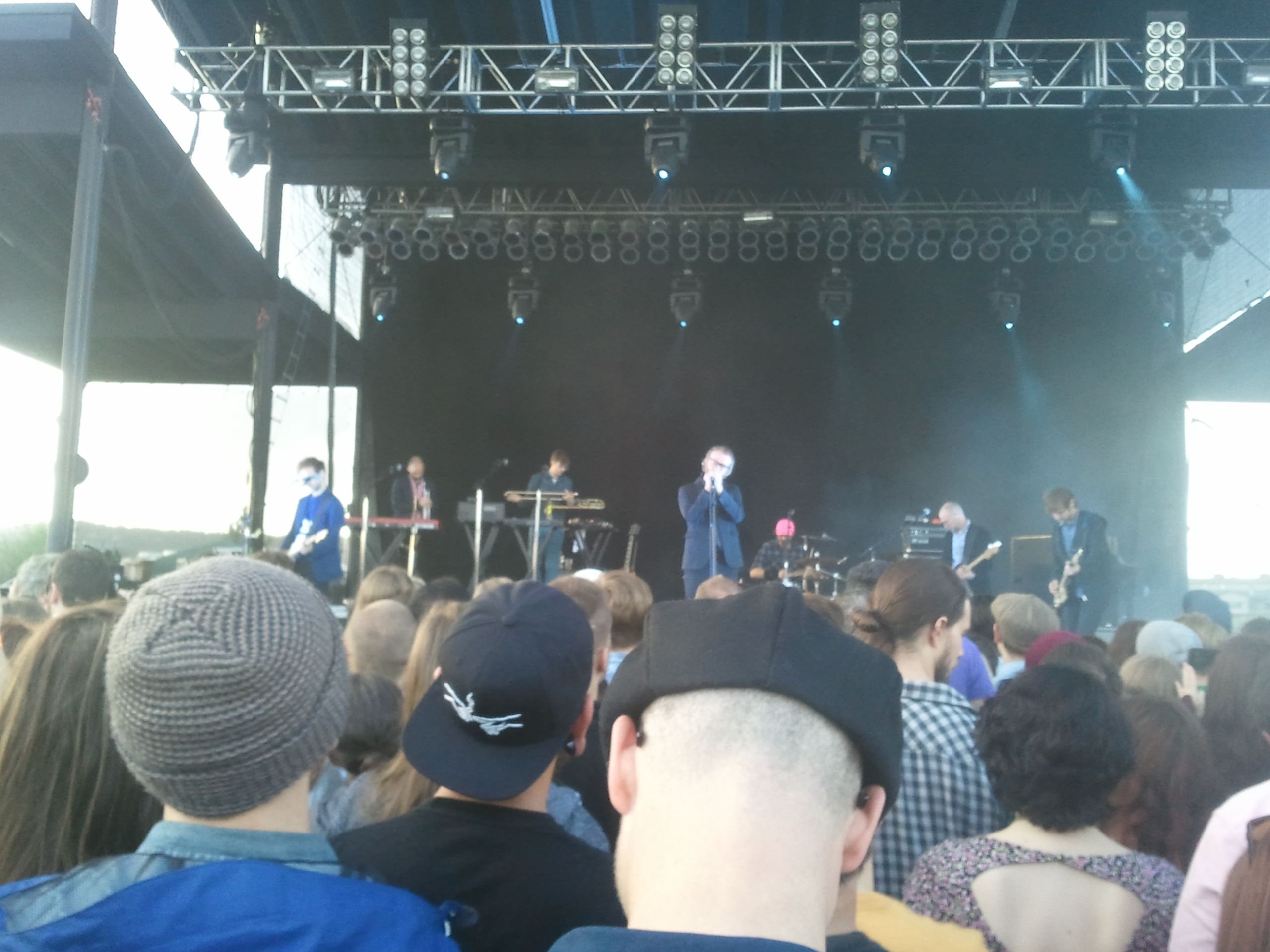
Yes, that is a Mooninite hat that drummer Bryan Devendorf is wearing

Yes, that is a Mooninite hat that drummer Bryan Devendorf is wearing

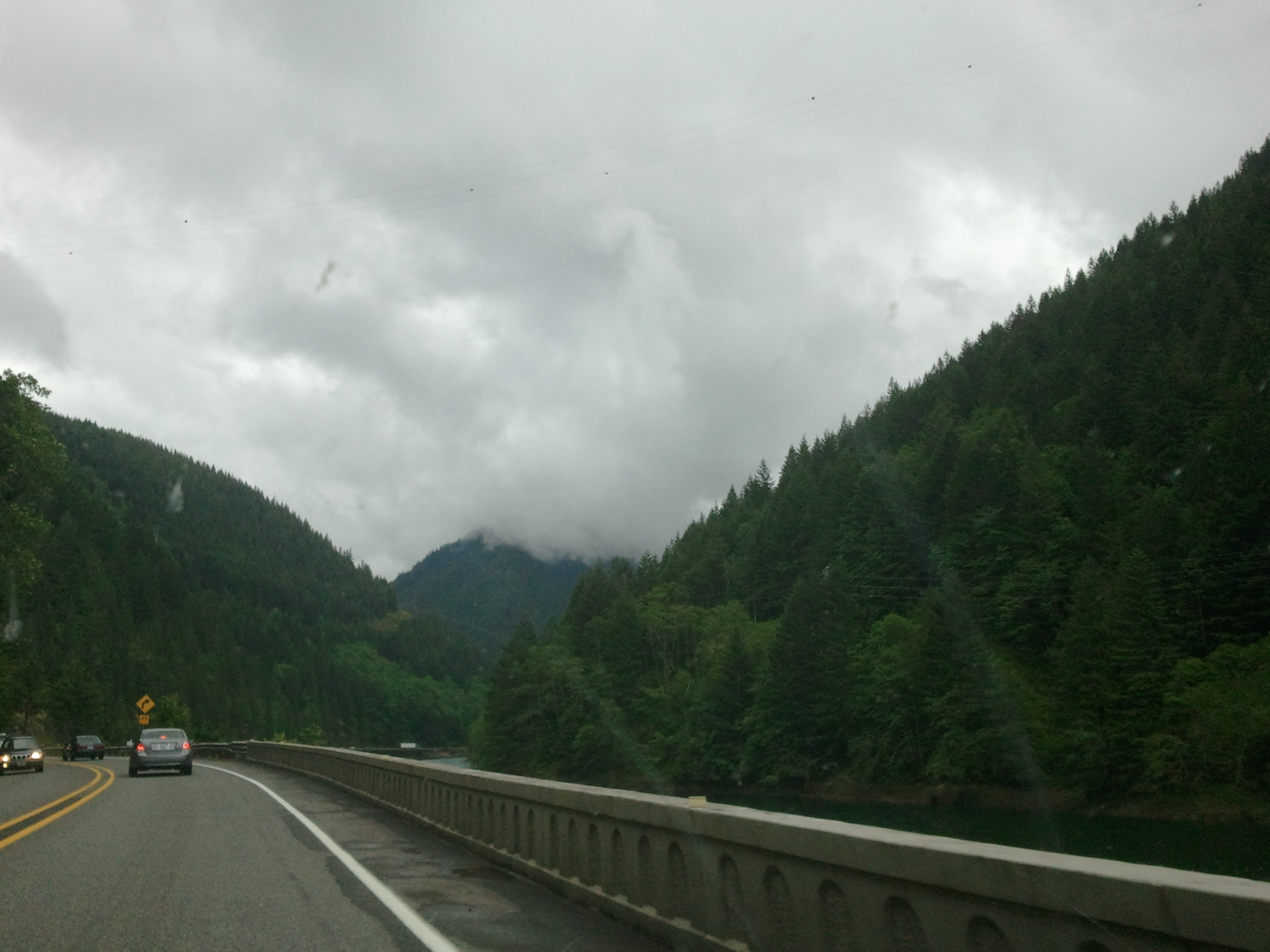
For those of you unfamiliar with the geography of Oregon, Bend is pretty much in the middle of nowhere.**  That’s not to say it isn’t a nice place to visit–it turns out that “middle of nowhere” comes with quite the view.  There’s a reason why a sleepy town at the foot of the Cascades became the center of a real estate boom, even though it’s hours away from all the other “metropolitan” areas of the state.  It’s a scenic drive that involves several different biomes, and you get a real insight into the geographic diversity of Oregon.

A few minutes outside of Detroit (probably not the Detroit you're thinking of)

A few minutes outside of Detroit (probably not the Detroit you’re thinking of)

I imagine that many people would expect that such a serene setting would be the perfect backdrop for the dulcet tones of The National.  What better place for a band that sang a song called “All the Wine” than a state known for its wonderful pinot noir?  However, wrapped up in those assumptions is a particular criticism of the band: The National are “boring” and are best described as “dad rock”.  One does not expect edginess or excitement within these parameters, and so there are many people that are quick to dismiss the group.  But this rush to judgment is often the result of purely superficial listens to the band.  On the surface of seemingly pleasant tunes, there lies a quiet (and often furious) intensity, and multiple listens reveal subtle instrumental nuances and dynamics from what initially seemed a flat affect.  It’s the equivalent of a difference between a soft and forceful whisper–while the overall volume is relatively the same, the emotional reaction to each is different, and it usually takes multiple listens and careful attention to notice this detail.

If you still don’t believe me after multiple listens (or are unwilling to go through the “work”) and still want to categorize the band as “boring”, then I recommend an easier solution: simply go see The National perform live.  All those claims earlier about nuance and subtleties and emotions and so on become much more apparent in a live setting, where you get the added visuals of seeing Matt Berninger roam around the stage while treating the microphone as the last best chance to plead his case, with the Dessners and Devendorfs sets of brothers building up and tearing down walls of sound behind him.  On Friday night, Matt had the crowd hanging on his every word, and they were eager to sing along with every lyric, with the two feeding of the energy of the other.  The crowd was especially lively and friendly at this performance, eager to participate (though truly befitting a crowd of Oregonians, less than rhythmically-inclined, a malady that was especially apparent during tUnE-yArDs opening set***) and even ready to share “substances” with strangers, a rarity among local crowds.

The stage and crowd in context

The stage and crowd in context

The set focused heavily on material from Trouble Will Find Me, though considering it took the number one spot in our Best of 2013 list, this was perfectly fine with us.  In general, more recent material had a heavier emphasis, with High Violet tracks making up a significant part of the set, though favorites from Boxer and Alligator made appearances as well, plus rare b-sides “Santa Clara” and “About Today”.  Even though it had been only a few months since their last visit to the Northwest, there were several subtle shifts in the particular arrangements, most notably with additional leads from Bryce Dessner (forgive me if I named the wrong twin, but I think I got it).  The overall mix was better this time around too, with a better balance between the vocals and instruments as well as between the instruments themselves.  Matt again enthralled the crowd with his theatrics, ranging from crooning from the side of the stage to punctuating the end of a song by throwing a wine glass at the back curtain.

The band effortlessly switched between gorgeous ballads like “Pink Rabbits” and “Ada” and slow-building rockers like “Don’t Swallow the Cap” and “Sea of Love”, but really shined when they cut loose and tore into ragers like “Abel”, with Matt throwing his whole body into screaming out along with the crowd “My mind’s not alright!”  The synergy between the band and the crowd came to a head during the encore, featuring Matt wandering into the crowd for a full-participation version of “Mr. November” (he didn’t walk right past me like he did at Edgefield, but I did my part by helping to make sure the mic cable didn’t clip anyone) and a cathartic “Terrible Love”, and finishing with an unplugged group sing-along of “Vanderlyle Crybaby Geeks”.  Any fan of the band came away impressed with the performance and happy to share with other fans, and I’d like to imagine that anybody who came in unsure walked out convinced about the greatness of the band.

And to think, as we all calmed down from the buzz of that wonderful experience as we ventured into the town in search of dinner, no one thought to say the words “dad rock”.

*I mean, there wouldn’t be that much point in writing that kind of intro otherwise, but maybe you just like surprises and completely forgot what the title to this post was.

**And for those of you who are looking for material for some sort of anti-Oregon screed, it coincidentally is pretty much in the middle of the state.  Though I don’t know why you’re going out of your way to rip on Oregon, but hey man, I ain’t judging.

***A quick note on tUnE-yArDs: I had listened to w h o k i l l after its inclusion on several critics’ lists and came away less than impressed, but the idiosyncratic style was easier to digest in a live setting, and the interesting melodies and danceable rhythms energized the crowd.  Unfortunately, there were many in the crowd who tried to clap along with the handclaps used by the group, not thinking that this could possibly be a hindrance when trying to set up a loop with a complex rhythm.  Also, there was one person who decided he should jump and clap at the same time–do one or the other, sir, because you cannot do both in time.