Recs

Eels, Live at the Aladdin

I’ve said it before, and I’ll say it again: it’s always a good idea to see Eels live.  Their reputation may not suggest it (singing a lot of bitter and sardonic ballads certainly helps contribute to a certain impression otherwise), but the band is usually guaranteed to turn in a memorable performance.  Steve Perry didn’t show up Sunday night, but the crowd definitely had a great time nonetheless.

It's summer, evening shows are starting when it's still light out

It’s summer, evening shows are starting when it’s still light out

In previous years, we had seen the band perform with a string quartet, feature a documentary about E’s physicist father and answer letters from fans, and create a retro-themed variety show.  This time around, the band ditched the matching track suits (and full beards) from the Wonderful, Glorious tour for more serious attire, fitting the mood of the band’s melancholic and reflective new album, The Cautionary Tales of Mark Oliver Everett.  It took a few songs before I settled on an appropriate descriptor, but an offhand comment by E realized that the suit-and-tie ensembles gave the group the look of a serious jazz quintet.  The comparison fit, because while several songs were a bit slower and more introspective, the band was still able to rev it up when the tune required it.

The show began with the instrumental opener of Cautionary Tales, which segued into a delicate cover of the old classic “When You Wish Upon A Star”.  The early songs were a mix of material from the new album and the Hombre Lobo/End Times/Tomorrow Morning trilogy, a batch that E remarked was full of “downers”, but were appropriately received by the audience nonetheless.  E kept the mood light with quips like that, asking the audience to forgive him for not behaving like a rock star and blowing his nose in a break between songs due to a cold, and informing the crowd that Portland folks welcomed him with a nice bag of cocaine, and that it should kick in any minute.  E never gets enough credit from the press for his humor and his willingness to engage the audience, but the crowd certainly appreciated it.
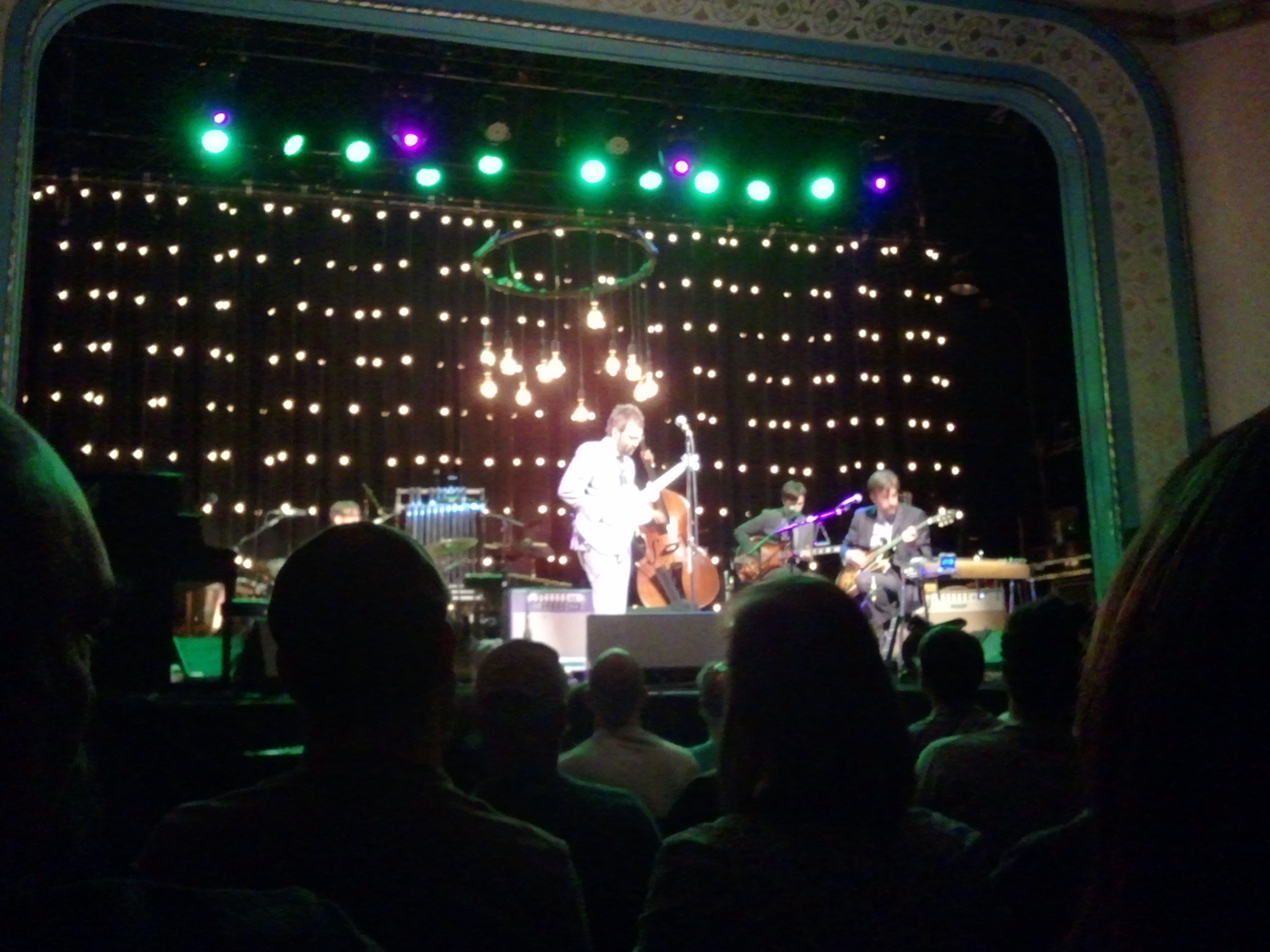
The band in their snazzy attire

The band in their snazzy attire

The pace would pick up when the band dipped into old favorites, like “Grace Kelly Blues”, “I Like Birds”, and “My Beloved Monster”.  The band was in fine form, and the fact that it was the same lineup from the Wonderful, Glorious tour probably helped the cohesiveness, as they effortlessly switched instruments and altered the arrangements.  It was a homecoming for three of the four backing members, as The Chet (guitars, pedal steel, melodica), Honest Al (upright bass), and Knuckles (drums/percussion, or “the yard sale back there”, as E joked) were all from the PDX area, and perhaps they were inspired by playing in front of a hometown crowd.  But the quality of the band and it’s always changing dynamic helps emphasize another great point of catching Eels live, and that’s that the band is always willing to alter a song or approach it from a new angle.  This was most commonly seen with their attempts to make “Novocaine for the Soul” fresh after playing it thousands of times, but on Sunday it was seen in reworkings of great songs like “Fresh Feelings” or “Last Stop: This Town”, both of which kept the spirit of the original versions but were intriguing new takes of the songs.

After a false encore, where E ran into the crowd and hugged audience members, and after a real encore break, the band ended with a beautifully sublime “3 Speed” and two excellent covers, an elegant rendition of “Can’t Help Falling In Love With You” and a gorgeous version of Harry Nilsson’s “Turn On Your Radio”.  The band then exited to a standing ovation, and the crowd was left hoping that the band would return soon, and wondering what they have next in store (even twenty years after their debut).
Review: Sharon Van Etten – Are We There

I remember first hearing of Sharon Van Etten back when her previous album Tramp was released.  In reading the press materials for the record, the mentions of The National and The Antlers immediately grabbed my attention–Aaron Dessner of the former produced the album, and she provided the haunting vocals on the latter’s “Thirteen” from Hospice.  Add in the fact that she had a habit on stopping by the AV Club for their “Undercover” series, and I was sold.  I picked up Tramp and was entranced by her unique voice, a sweet yet vulnerable timbre equipped with a slight countryish tinge.  Songs like “Warsaw” and “Magic Chords” would stick in my head for days, but for many “Serpents” was the song that got people’s attention (it helped that it was used for a promotion for “The Walking Dead”, but hey, who am I to knock where people first hear great music?)

Are We There turns out to be an excellent showcase for the musical growth of Van Etten.  Before, most songs would reveal themselves at the beginning and consist of mainly basic elements; you would hear the verse and the chorus, usually using the same instruments, and have a good idea for how the rest of the song goes.  On Are We There, Van Etten instead opts for the “slow-reveal” approach, gradually building songs from the ground-up, slowly adding layers and building to thrilling climaxes.  Often these climaxes are mirrored by a cathartic release as Van Etten shares especially painful and confessional lyrics.  The ending of “Your Love Is Killing Me” is an unforgettable example, as she expands on the chorus to reveal that “You love me as you torture me; you tell me that you like it” as the band swells around her.

Van Etten also branches out with different instrumentation, moving beyond more traditional folk/rock standards.  Piano and guitar is still present, but are augmented by careful touches of strings and horns (as in the sublime “Tarifa”) or the occasional use of a drum machine or other programming (“Our Love” bears more than a passing resemblance to a Beach House song with the minimalist programming and soft female vocal).  The single “Taking Chances” makes use of the latter, building on a programmed drum beat with mellow keyboard, with the guitar saved for accented hits during the chorus.

Still, the selling point remains Van Etten’s uniquely beautiful voice and her personal songwriting.  The album is often dark, though there are moments of black humor that provide a bit of levity, as seen in the album closer “Every Time The Sun Comes Up”, where she stretches lines like “People say I’m a one-hit wonder, but what happens when I have two?  I washed your dishes then I shit in your bathroom” out to great effect.  Even so, the saddest and bitterest songs leave the greatest impression, with the effects of “Your Love Is Killing Me”, “I Know”, and “You Know Me Well” lasting long after the album is over.  Are We There doesn’t have the same evenhanded flow as Tramp, but the peaks are often higher.

And you have to appreciate an artist that provides a list of “Recommended Listening”, and includes the likes of The War On Drugs, Suicide, Spiritualized, Kurt Vile, and The Men, among several others.  Thanks Sharon, now I have additional homework to do.

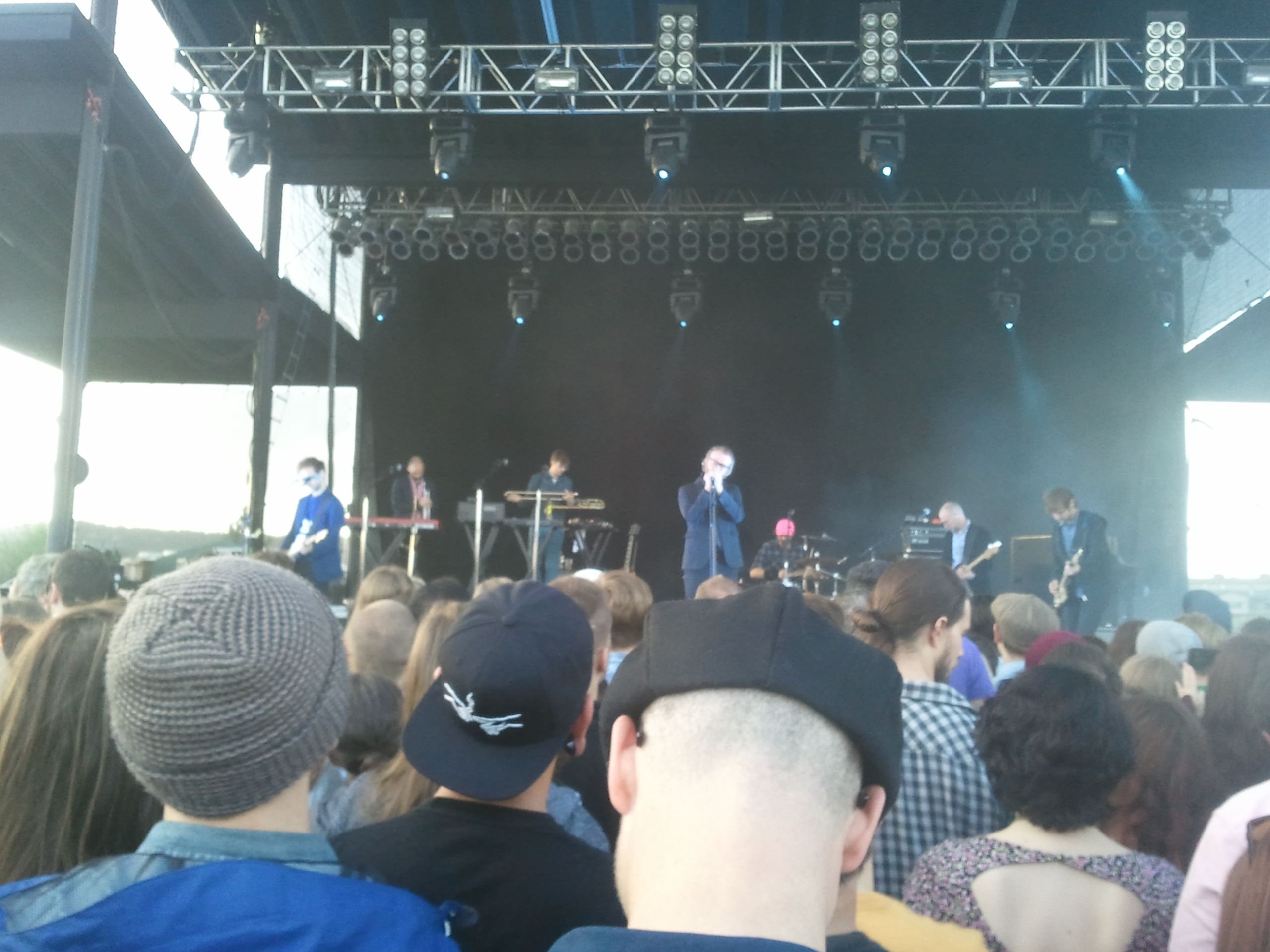
The National, Live at the Les Schwab Amphitheater

There aren’t many artists for whom it’s worth traveling six hours round-trip to see; there are even fewer for whom it’s worth taking that trip after seeing them only nine months before.  The National is one of those artists.*

Yes, that is a Mooninite hat that drummer Bryan Devendorf is wearing

Yes, that is a Mooninite hat that drummer Bryan Devendorf is wearing

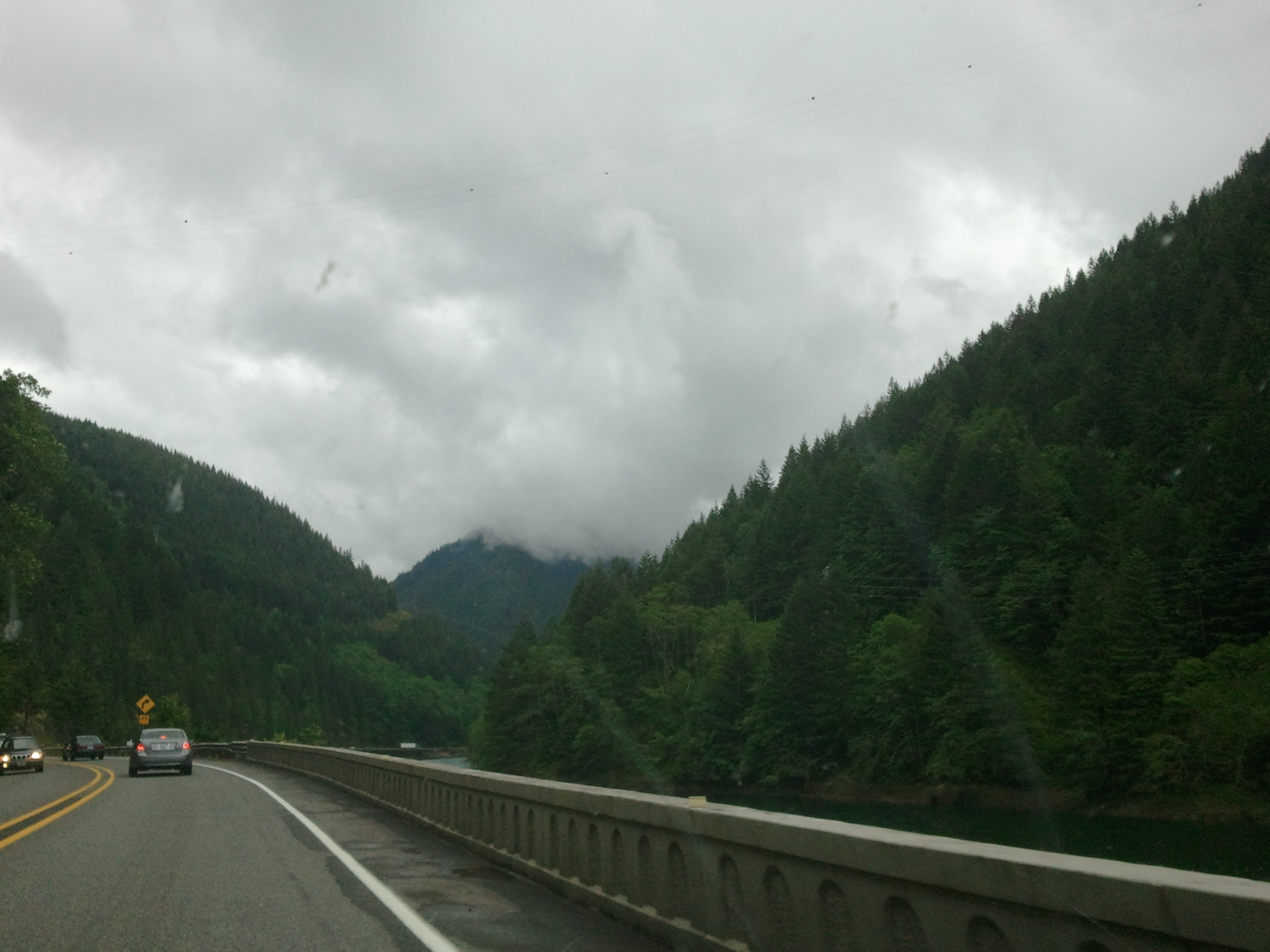
For those of you unfamiliar with the geography of Oregon, Bend is pretty much in the middle of nowhere.**  That’s not to say it isn’t a nice place to visit–it turns out that “middle of nowhere” comes with quite the view.  There’s a reason why a sleepy town at the foot of the Cascades became the center of a real estate boom, even though it’s hours away from all the other “metropolitan” areas of the state.  It’s a scenic drive that involves several different biomes, and you get a real insight into the geographic diversity of Oregon.

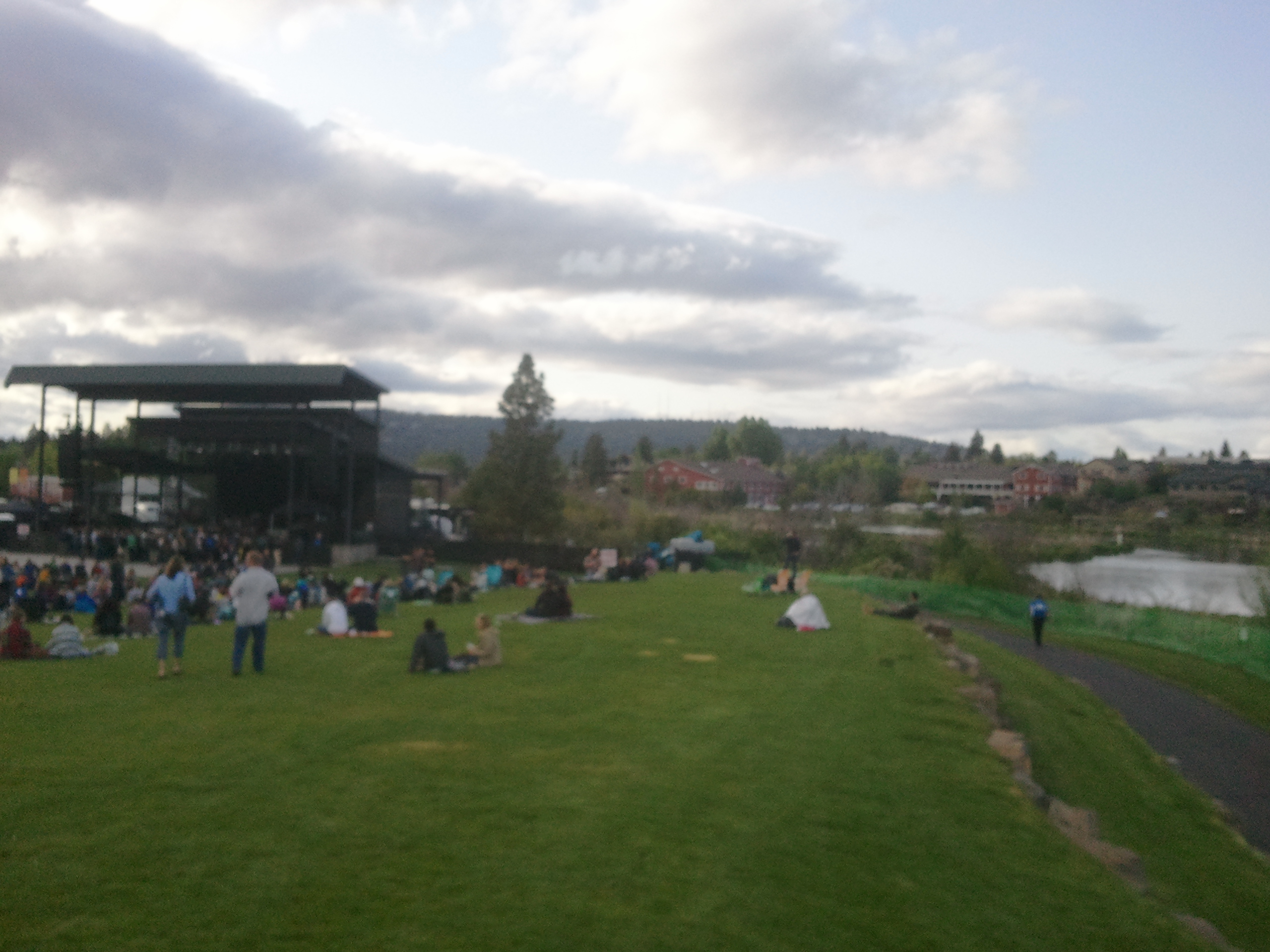
A few minutes outside of Detroit (probably not the Detroit you're thinking of)

A few minutes outside of Detroit (probably not the Detroit you’re thinking of)

I imagine that many people would expect that such a serene setting would be the perfect backdrop for the dulcet tones of The National.  What better place for a band that sang a song called “All the Wine” than a state known for its wonderful pinot noir?  However, wrapped up in those assumptions is a particular criticism of the band: The National are “boring” and are best described as “dad rock”.  One does not expect edginess or excitement within these parameters, and so there are many people that are quick to dismiss the group.  But this rush to judgment is often the result of purely superficial listens to the band.  On the surface of seemingly pleasant tunes, there lies a quiet (and often furious) intensity, and multiple listens reveal subtle instrumental nuances and dynamics from what initially seemed a flat affect.  It’s the equivalent of a difference between a soft and forceful whisper–while the overall volume is relatively the same, the emotional reaction to each is different, and it usually takes multiple listens and careful attention to notice this detail.

If you still don’t believe me after multiple listens (or are unwilling to go through the “work”) and still want to categorize the band as “boring”, then I recommend an easier solution: simply go see The National perform live.  All those claims earlier about nuance and subtleties and emotions and so on become much more apparent in a live setting, where you get the added visuals of seeing Matt Berninger roam around the stage while treating the microphone as the last best chance to plead his case, with the Dessners and Devendorfs sets of brothers building up and tearing down walls of sound behind him.  On Friday night, Matt had the crowd hanging on his every word, and they were eager to sing along with every lyric, with the two feeding of the energy of the other.  The crowd was especially lively and friendly at this performance, eager to participate (though truly befitting a crowd of Oregonians, less than rhythmically-inclined, a malady that was especially apparent during tUnE-yArDs opening set***) and even ready to share “substances” with strangers, a rarity among local crowds.

The stage and crowd in context

The stage and crowd in context

The set focused heavily on material from Trouble Will Find Me, though considering it took the number one spot in our Best of 2013 list, this was perfectly fine with us.  In general, more recent material had a heavier emphasis, with High Violet tracks making up a significant part of the set, though favorites from Boxer and Alligator made appearances as well, plus rare b-sides “Santa Clara” and “About Today”.  Even though it had been only a few months since their last visit to the Northwest, there were several subtle shifts in the particular arrangements, most notably with additional leads from Bryce Dessner (forgive me if I named the wrong twin, but I think I got it).  The overall mix was better this time around too, with a better balance between the vocals and instruments as well as between the instruments themselves.  Matt again enthralled the crowd with his theatrics, ranging from crooning from the side of the stage to punctuating the end of a song by throwing a wine glass at the back curtain.

The band effortlessly switched between gorgeous ballads like “Pink Rabbits” and “Ada” and slow-building rockers like “Don’t Swallow the Cap” and “Sea of Love”, but really shined when they cut loose and tore into ragers like “Abel”, with Matt throwing his whole body into screaming out along with the crowd “My mind’s not alright!”  The synergy between the band and the crowd came to a head during the encore, featuring Matt wandering into the crowd for a full-participation version of “Mr. November” (he didn’t walk right past me like he did at Edgefield, but I did my part by helping to make sure the mic cable didn’t clip anyone) and a cathartic “Terrible Love”, and finishing with an unplugged group sing-along of “Vanderlyle Crybaby Geeks”.  Any fan of the band came away impressed with the performance and happy to share with other fans, and I’d like to imagine that anybody who came in unsure walked out convinced about the greatness of the band.

And to think, as we all calmed down from the buzz of that wonderful experience as we ventured into the town in search of dinner, no one thought to say the words “dad rock”.

*I mean, there wouldn’t be that much point in writing that kind of intro otherwise, but maybe you just like surprises and completely forgot what the title to this post was.

**And for those of you who are looking for material for some sort of anti-Oregon screed, it coincidentally is pretty much in the middle of the state.  Though I don’t know why you’re going out of your way to rip on Oregon, but hey man, I ain’t judging.

***A quick note on tUnE-yArDs: I had listened to w h o k i l l after its inclusion on several critics’ lists and came away less than impressed, but the idiosyncratic style was easier to digest in a live setting, and the interesting melodies and danceable rhythms energized the crowd.  Unfortunately, there were many in the crowd who tried to clap along with the handclaps used by the group, not thinking that this could possibly be a hindrance when trying to set up a loop with a complex rhythm.  Also, there was one person who decided he should jump and clap at the same time–do one or the other, sir, because you cannot do both in time.

Review: The Black Keys – Turn Blue

It’s a bit odd that for a band that got its start and first achieved fame as a blues band, that it wasn’t until their eighth album that anyone would call an album by The Black Keys “sad”.  Part of that is the nature of the blues: even when you’re writing about how life has done you wrong, the goal is to keep it from letting you stay down for too long.

Turn Blue isn’t a typical “sad” album however.   There is no overwhelming aura of depression or melancholy; it’s marked more by a sense of restraint and internal contemplation, especially compared to their most recent work (most notably the built-for-arena-touring El Camino and their crossover breakthrough Brothers).  Instead of outsized swagger and riffs, the album relies on intimate grooves and swirling psychedelic touches.  It’s definitely of a piece of their post-Magic Potion work (i.e., it’s not the down-and-dirty two-man grimey blues of their early work), but it’s examining a different aspect of that style.

The album kicks off with the fantastic “Weight of Love”, a slow-burner that begs for repeated listens–a desire that I’ve indulged in several times already.  A ballad that takes its time to gradually build over six minutes before carefully fading away, it serves as a great mission statement for the album.  The song signals the return to prominence of guitar to The Black Keys’ sound, with three separate, gorgeous solos from Dan Auerbach, culminating in a thrilling double-tracked ripper at the climax.  While the solos are definitely worthy of being singled out for praise, the song works so well because of the efforts of all the musicians involved.  The breakdowns to the bare grooves of the verses lead into gorgeous swells of the chorus and climax as instruments are added to the mix, and Patrick Carney’s fills in the solo mark some of his finest work to date.

[There originally was a YouTube clip of the song included in this post, but it has since been taken down.  We will attempt to post a replacement when one becomes available.]

The album maintains a mysterious, somewhat ethereal mood throughout, with 60’s/70’s soul replacing the blues and classic rock as the primary influence this time around.  It’s noticeable even on the tracks meant to get the crowd moving, like on the lead single “Fever”.  The keyboard melody is catchy, but there is a slight air of disturbed menace that gives the whole song a delirious quality, especially considering the lyrics.  Though it has escaped attention from most people, the ending should be given some special praise, as it does a great job of inverting the melody to build up the mild paranoia evoked in the song before falling apart at the end.

The blues influences haven’t completely disappeared, however.  “It’s Up To You Now” relies on a similar groove to The Stooges’ “1969” (with the addition of typical eighth-note drum hits from Carney to accent the end of each phrase), and the halftime breakdown features an especially sleazy guitar solo.  The ingratiatingly fun closer “Gotta Get Away” is the closest the band gets to big dumb classic rock, and it serves as an excellent epilogue to the seriousness preceding it.  Considering how easily it puts a smile on your face, it wouldn’t be a surprise if it ended up being a single down the line.

Danger Mouse contributes a lot of his signature touches to the album, but his production doesn’t overwhelm the group.  Some of his trademarks do show up, like the muted staccato bass, the subtle organ flourishes, and the spaghetti western-influenced strings (the last of which is most clearly heard in “Year in Review” and “10 Lovers”).  But the band has incorporated a lot of these aspects into their sound already at this point, and they never push Dan’s guitar and vocals away from the spotlight.  It’s clear that since Danger Mouse’s initial contributions to Attack & Release that the group has evolved into a different entity; at the time, it was a necessary injection of new blood, as the original formula had begun to deliver diminished returns (though I believe that Magic Potion doesn’t deserve the poor reputation that it seems to have received).  Though the sound of present-day Black Keys differs in many ways from the Rubber Factory and thickfreakness days, one can still feel the basic DNA of their sound still present in the music, that it’s simply exploring different sonic territory through their own unique lens.

Modest Mouse, Live at the Crystal Ballroom

Last Thursday saw the return of one of the most significant and unique voices in indie rock, as Modest Mouse kicked off a new tour with a two-night homestand at Portland’s Crystal Ballroom.  It was a personal return for me as well, since I hadn’t seen the band perform at the Crystal since they did a four-night run back in 2004, right as “Float On” broke the band into the mainstream and out of college radio late-night playlists.  Fans across the nation were eager to know if we would finally hear some of the new material from their oft-delayed follow-up to their 2009 EP No One’s First and You’re Next (or to go back even further, to their last album, 2007’s We Were Dead Before the Ship Even Sank).  To quickly answer the question, no we didn’t hear any new music per se, though a few songs were new to me (“Sugar Boats”, “Shit in Your Cut”, and “Lampshades on Fire” have not been released yet, though they had been a part of a few scattered live performances recently).

A handy concert calendar

A handy concert calendar

People have had varying experiences with Modest Mouse concerts, and I’ve read a few reviews where people were disappointed with their live set.  After seeing them five times over 10 years at a variety of venues, I’m ready to say that it’s more likely than not that you’ll see a stellar show if you’re a true fan of the band.  Things may have been different back in the early days where you weren’t certain what kind of state Isaac would show up in, but even the performance where he came off as a bit drunk had its charms, as I remember a particularly funny conversation that he had with an audience member on why they had trouble playing “Dramamine” (something along the lines of “it’s our first song from our first record, it’s hard to remember how to play it, it’s been a while!”).  Every other performance has been outstanding, through all the different compositions of the band, with a set list that varies quite a bit from show-to-show.  Chances are you’ll hear at least one deep cut from an early album at a show, which should be enough enticement for fans–it’s not a strict “greatest hits” playlist, in other words.

The night began with a slow start, as the crowd became restless when the band took its time before hitting the stage.  It didn’t help that it was apparently many people’s first experience at a rock show, as you would hear random cheers when a roadie would come up to check an instrument or when a song from the system PA would end (here’s my quick reminder: the show hasn’t started until they turn off the house lights–just settle in until then).  And initially, it seemed that the band was having to deal with first-show issues as instruments and mixing seemed to be an issue (though the latter is definitely a continual problem with shows at the Crystal).  But by the time they got to “Ocean Breathes Salty” with the second song, all was forgiven as the crowd sang along with all the words.

We were treated to a career-spanning setlist, so fans from all eras of the band should have been pleased.  Personal highlights included the rarity “Baby Blue Sedan” and the trio from the brilliant The Moon & Antarctica, especially a rambunctious version of “Tiny Cities Made of Ashes” that along with a raucous “Doin’ the Cockroach” formed a hell of a one-two punch to close the show.  While the inclusion of “The World at Large” was to almost-be-expected (but not guaranteed, especially considering that “Float On” was absent from both nights’ setlists), it still was a moving experience, as a deeper inspection of lyrics over the years has revealed to me a beautifully melancholic perspective that I find has taken on increasing personal relevance with each passing day.  (Though, unlike the performance in the link, Isaac played his usual guitar, possibly due to the fact that if they kept up the same instrumental setup over the years, they’d have to increase their keyboard budget significantly).

Over the course of the show, Isaac gradually loosened up and engaged with the crowd, possibly due to the fact that the venue had trapped in most of the heat on an unseasonably warm 90 degree day in May.  We were treated to two great random stories, one referring to cat food and the other to his spectacularly short stint as an actor.  For the first, Isaac told us how when walking past the venue earlier in the afternoon, he noticed a strange smell, later determining it to be cat food; he then remarked how that smell reminded him of visits to his grandmother’s house, but then he remembered that his grandmother had no cats (abrupt end of the story on purpose and warned about beforehand).  The other was related directly to the chants coming from the back of the crowd* that he remarked “Chanting is hard to hear”, getting the crowd to chant that as a counter.  He then told us about his work as an extra on The Pelican Brief, where he and his girlfriend were part of a group of protesters that were picketing whatever they wanted and shouting, just as B-Roll footage; the kicker was that it was such a pain in the ass that his girlfriend at the time didn’t bother to show up the next day, but he did and signed her in as well, meaning that he got both his $50 for the day and hers as well (as he said, it was clear that he needed the extra money more than she did).

Overall, the band sounded great, with the current lineup well-prepared to tackle the diverse instrumentation that is required of the Modest Mouse catalog.  Hopefully over the course of the tour we’ll hear some more news about a potential new album, but meanwhile if you’re still on the fence to attend one of their shows, take my word for it and go.

*The chants were for a former band member, and when Isaac realized this, his answer was “Maybe…I don’t know…we’ll see.”

Mastodon, Live at the Roseland

I would say that with most shows that I go to that I have an encyclopedic knowledge (or something approximating that standard) of the band I’m about to see.  I expect to know the title of each song that I hear instantaneously, and probably a few facts about it as well.  However, that is not always the case.

Exiting the show

Exiting the show

I’ve been listening to Mastodon ever since I heard that they were releasing a concept album about Moby Dick.  I decided that right then and there, that I needed to purchase this record because 1). The band’s name was Mastodon; 2). They wrote an album called Leviathan; and 3). It was a concept album about Moby Dick.  It really does not get more metal than that.  And to think,  ten years later, it’s probably only the third-most ridiculous thing they’ve done.

I’ve enjoyed listening to Leviathan over the years, and have dutifully bought each subsequent release, but I can’t say that I truly understand their music.  In many ways, listening to Mastodon has mirrored my attempts to read Gravity’s Rainbow–the individual sentences make sense (the riffs), and I get the idea of the general story (the album as a whole), but fuck me if I know what’s happening from paragraph-to-paragraph (the songs).  So, generally my impressions of Mastodon go from “that’s a sick riff/drumfill” to “that was a really intense experience”.  It would be pure luck if I could identify a song as it were playing, for the most part.

I'm pretty sure the lighting indicates this was a "Leviathan" track

I’m pretty sure the lighting indicates this was a “Leviathan” track

Therefore, I’m not the best source for Mastodon fans who want to hear about the band as they kicked off their most recent tour in Portland, in anticipation of the release of their upcoming album Once More ‘Round the Sun.  I can tell you these things for certain: the band was incredibly tight, with Brent Hinds’s solos and Brann Dailor’s drumming being specific standouts, and it was incredibly loud.  The vocals were buried deep in the mix for each vocalist, but I’d argue they were probably not the most important part of each song.  The set was a pretty even mix of material from each album, and featured a couple of new tracks as well: “High Road”, which I immediately recognized (especially with Brann’s Ozzy-ish vocals in the chorus), and “Chimes at Midnight”, which I did not.

The main takeaway I’d say is that Mastodon fans should be excited to once again see them on tour, and novices shouldn’t be afraid to witness a spectacle of amazing musicianship.  In other words, I was glad to get my metal on once again, even if it was on a Tuesday night.

Essential Classics: Eels – Electro-Shock Blues

With the release last week of The Cautionary Tales of Mark Oliver Everett, the eleventh album from Eels, now is the perfect time to take a closer look and examine their greatest work, Electro-Shock Blues.

Electro-Shock Blues was the follow-up to Eels’ debut album, Beautiful Freak, which is known mainly for the smash hit single “Novocaine for the Soul”.  That song would be both a blessing and a curse for the band, as it helped them break through to a wider audience (E had previously released two solo albums before adopting the “Eels” moniker, and while both records are good, they never received much commercial success), and was an effective calling card for the band’s style.  From E’s distinctive voice, to their often bitterly sarcastic take on life (the lyric “Jesus and his lawyer are coming back” is a great example of capturing that typical mid-90’s cynical detachment), to their focus on how to treat emotional pain (summed up perfectly in the title), “Novocaine” was in many ways representative of their style.  On the other hand, that meant a lifetime of dealing with expectations of playing the song every night on tour.  E’s approach of completely altering the style of the song each tour has been an effective remedy, varying between such drastic differences as the surf-rock version of the Electro-Shock tour or the withdrawn, restrained version of the With Strings tour, turning a rote performance into a surprising highlight each night.

All of this is to provide the background that Eels should have been in position to enjoy their new-found success.  Unfortunately, real life intervened as E was confronted with the deaths of his sister (suicide) and mother (lung cancer), among others, after the release of Beautiful Freak.  E worked through the feelings of being the last living member of his immediate family and channeled his grief into the production of Electro-Shock Blues, making it more than the stereotypical “difficult second album”.  The intentions are clear from the outset, with “Elizabeth on the Bathroom Floor”.  E uses his sister’s diary to give a harrowing look at her anguish as she struggled with mental illness (summed up with the concluding lines “My name is Elizabeth; my life is shit and piss.”), and backs the lyrics with a delicate, spare guitar and a ghostly backing choir.  The subject matter remains grim for the next few tracks, with “Going To Your Funeral Part I”, “Cancer for the Cure”, and “My Descent Into Madness”, but the tone of the music shifts to provide an effective counterpoint and cut against the seriousness of the topic.  “Funeral” has a slightly sinister ambiance, but is driven by a slow, grooving bass line; “Cancer for the Cure” is a goofy rave-up, complete with cheesy organ accents (a similar approach is taken with the jazzy “Hospital Food”); and “My Descent Into Madness” has an optimistic tone with fancy classical string flourishes and warm keyboards, which provide a sharp comment on the lyrics covering medically-induced happiness courtesy of institutionalization (“Come visit me at eight o’clock, and then you’ll see how I’m not the crazy one”).

The album reaches a turning point with the song “Last Stop: This Town”, as E copes with his loss by imagining flying above the city with his deceased sister.  He begins by showing her the world that she has left behind, and then the distortion kicks in with some turntable scratches, as they travel together on an emotional journey (a physical manifestation of the inner turmoil–“taking a spin through the neighborhood, the neighbors scream, ‘What are you talking about?,’ cause they don’t know how to let you in, and I can’t let you out”).  There is a moment of regret, when E asks, “Can you take me where you’re going if you’re never coming back?”  However, by the end of the song he’s content to let her go, as indicated by the brighter tone of his vocals in the last chorus.

https://www.youtube.com/watch?v=vPfz_bCwhYo

The other peak on the album is the tender “Climbing to the Moon”, as E recounts a visit with his sister while she was institutionalized.  The lyrics by themselves are heart-breaking, but the music often underscores key emotional components that only add to their emotional impact.  Subtle touches like airy synths after “Got a sky that looks like heaven” and a country-tinged, lower-register guitar figure after “Got an earth that looks like shit” help accentuate the metaphors.  Sometimes these details work in the opposite way, providing an ironic element; as E sings about climbing to the moon, the chords gradually descend with the lyrics “Got my foot on the ladder”.  The entire chord progression in the chorus is naturally circular and begs repetition, emphasizing the futility of the task of literally climbing to the moon.  Yet the hopeful tone and lyrics show that it’s not worth it to be bogged down in the hopelessness of the situation, but to continually press ahead.

Eels closes the album with songs that show E contemplating how to move ahead.  “The Medication is Wearing Off” sees E facing the death of his mother with the knowledge that even though she’s gone, life still moves forward, as evidenced by the metaphor of his mother’s watch that keeps ticking.  That doesn’t mean that he is finished grieving–“The medication’s wearing off–gonna hurt a little, not a lot” and “Sunrise on the corner of Sunset and Alvarado, I think ‘What the hell do I do now–watch the day disintegrate, so I can stay up late and wait?'” indicate otherwise.  But he knows he has to continue, and the slight repeating guitar lick is a gentle reminder.  E adds an upbeat postscript (literally) with “P.S., You Work My World”, as he realizes that even if the outside world is falling apart and he has no idea what he should do, that “maybe it’s time to live.”

As a whole, the album is a perfect encapsulation of all the various emotions that come with the grieving process, all backed by delicate instrumentation that never overwhelms the listener, and balanced with key moments of levity.  It’s powerful without ever being overbearing, and catchy while still inviting closer scrutiny.  It may not have had the cultural impact that other records covering the same territory did, but I’d argue that it did so in a far more effective manner.  With Electro-Shock Blues, Eels proved that not only were they not a one-hit wonder, but that they were great artists worth following, even as their career would go on for decades.

Franz Ferdinand, Live at the Roseland

We need to have a serious discussion: Franz Ferdinand is an incredibly underrated live band.

I have never been particularly passionate about Franz Ferdinand, instead merely content to listen to their albums every so often, with a periodic defense of their post-debut output.  However, after seeing them at the Wonder Ballroom back in 2012, I had to reassess my position, and I became more insistent about their talent due to their unbelievably fun live show.  Saturday night’s stellar performance at the Roseland was able to fully confirm their greatness.

RIJR continues to provide the finest random concert photography

RIJR continues to provide the finest random concert photography

The show started off with a bang, as Franz opened up with the explosive single “Bullet” from the recent Right Thoughts, Right Words, Right Action (sharing the number 8 spot in our ranking of last year’s albums, for the record).  The band kept the momentum up with the fan-favorite “Michael”, a delightful twist on the usual sexual dynamics of the traditional pop love song.  A raucous version of “The Fallen” followed, with Alex Kapranos stretching out some of the lines and throwing in a little flair with his guitar playing, and “No You Girls” signaled that the party had officially arrived.  Throughout their set, it was clear that the band had perfected the mix of caddishness from their early days to the more libertine seediness of their recent work, all done with a grin and a catchy dance beat.

The band was able to effortlessly shift through their four albums, though the band made sure to showcase most of Right Thoughts.  A combined version of Tonight‘s “Can’t Stop Feeling” and “Auf Achse” was a perfect example of this, with the latter nestled perfectly in the middle of the former.  It took a few moments to realize that the band had transitioned between songs as they played, and I was surprised because I never heard the parallels between the two songs before.

Throughout the night, the band effortlessly engaged with the audience, dancing along when appropriate or goading participation from the crowd.  The audience was eager to clap along, and in a manner unusual for Portland audiences, actually kept the beat (most of the time).  Kapranos in particular was a delight, with his goofy dancing and his playful come ons.   When the band played “This Fire”, the crowd eagerly joined in on the chorus and shouted along, until Kapranos was able to bring the volume of the chants down to a minimum, before of course exploding in the end (though I should note that if it was a hip-hop show, if the crowd chanted “We’re gonna burn this city!”, the Portland police would have shut down the whole show before the end of the song).  The band concluded their set with and extended full-band drum solo in “Outsiders”, as each member grabbed sticks to play along on the drumset–a trick that they pulled off at the Wonder Ballroom before, but I’m glad to see that it’s now an established part of their set.

The only issue was that at some points the band’s tempo was out-of-step with the audience, with the band more willing to slow it down a bit and grind while the crowd was eager to explode.  Such tension could easily be felt with songs like “Take Me Out”, where the crowd wanted to lose their minds but the band wanted to rein things in to the proper deliberate stomp of the original.  But that’s really a nitpick, and it shows discipline on the band’s part for adhering to tighter rhythmic control.  However, it was pleasantly surprising that the show ended up selling out, considering I was able to purchase tickets earlier in the week with ease, and too bad for those who were unfortunate enough to miss out, because they missed an amazing show.  If word continues to spread, I may need to make sure I make my purchase well in advance.

The Men, Live at Dante’s

There’s really no better way to cap a Record Store Day (or just a beautiful spring weekend in general) than to go to a tiny club and see a great young band just rip through a set.  We got that exact opportunity last weekend when we caught RIJR favorites The Men do a blistering one hour show at one of Portland’s great gems, Dante’s.  And our enjoyment was certainly not only due to our kind waitress, though she certainly helped.

Well, not tonight.  But the sign was correct when taken.

Well, not tonight. But the sign was correct when taken.

The night began with an anti-comedy duo that when Tim & Eric are ever properly brought up on charges for the terror they’ve inflicted on audiences will be presented as Exhibits (E) and (F).  Needless to say, at our first sight of a dilapidated ventriloquist’s dummy we were all of a sudden no longer perplexed as to why tables were still set up but instead grateful.  Grateful for the seating as well as the opportunity to procure various alcoholic beverages to make the “show” more “enjoyable” (for the record, since this is Portland, the beverages were IPAs and bourbons because we don’t believe in bullshit).   The next act, Nasalrod, featured a frontman that was simultaneously late-period David Lee Roth (thinning hair and a gut) and early-period David Lee Roth (doing flying leg-kicks and stage-diving).  I remember nothing specific about the music, except that it was loud, not-melodic, and full of energy, which was perfect for the setting.  Gun Outfit provided a nice change of pace, with actual songs, and now I am reminded that I should probably look up more of their stuff because they were quite good.

We had caught The Men before at the very same venue during MusicFest NW last fall, but with a new record out we were anxious to hear how different their set would be.  Whereas last time New Moon featured heavily and allowed the band to stretch a bit, including an extended-version of “I Saw Her Face” that opened the show, Saturday night was a take-no-prisoners run that went through the majority of Tomorrow’s Hits.  For all the fans that bemoaned how the band had changed their sound to be, for lack of a better word, more “polished”, this performance was a stark rebuttal from the band.  The Men upped the tempo, cranked up the amplifiers, and blasted through raucous versions of “Going Down”, “Pearly Gates”, and even the shuffling “The Dark Waltz”.  And for those wondering how the band would replicate some of the cool horn parts, a couple of guitar pedals were apparently all that were necessary to recreate the fun stomp of “Another Night”.

The curtains really add the right touch.

The curtains really add the right touch.

Sure, the mix was a little off, with the vocals buried way below all the guitars and keyboards; if you were unfamiliar with the new material, the set would have seemed to just run together.  Fortunately, it seemed that the crowd knew their stuff and sang along anyway.  And yes, it was loud as fuck, but at a show like this, that’s a feature and not a bug; we were informed by our waitress Brittney that at soundcheck it was the first time they had to tell a band to turn it down a little bit, and perhaps they didn’t fully understand the request.  It was a good thing we had worked out a system before the band took the stage so our drink orders were still heard.

Despite the crowd’s pleas for an encore, the band did not return, which makes the one that we received back in the fall a seemingly more unique experience, and the band’s surprise at our demand seem even more genuine.  Everyone still left buzzed and in good spirits, and I was glad to shake guitarist Nick Chiericozzi ‘s hand and congratulate him on a great show (once he finished downing his shot of tequila).  Let’s hope that this trend of quick return trips back to Portland continues.

Queens of the Stone Age, Live at the Keller Auditorium

It’s become increasingly clear that if you’re going to see a band perform, it’s best to do it in Portland.  Sure, we always have enthusiastic crowds and a ton of great venues, but that’s been the case for years.  What I’m talking about is that special moment that sends you straight to your cell phone to put everyone on blast that “Holy shit, you won’t believe what happened at the **** show!”  Just in the past few months, we’ve seen a Sleater-Kinney “reunion” at a Pearl Jam show, Jim James showing up to do a John Lennon cover with The War On Drugs, and now a surprise reconciliation at Tuesday’s Queens of the Stone Age concert.

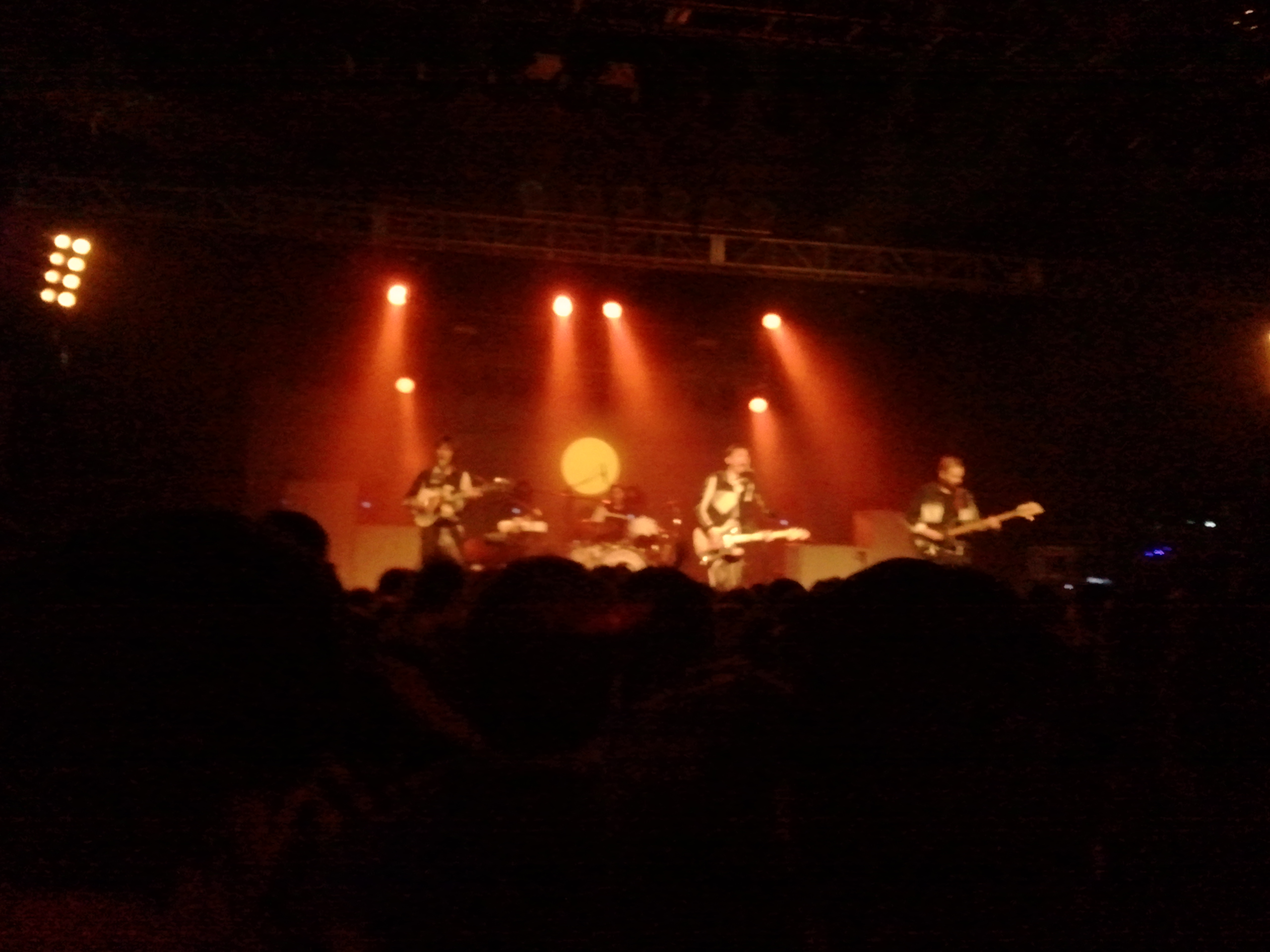
I didn't realize most of the new material was in standard tuning

I didn’t realize most of the new material was in standard tuning

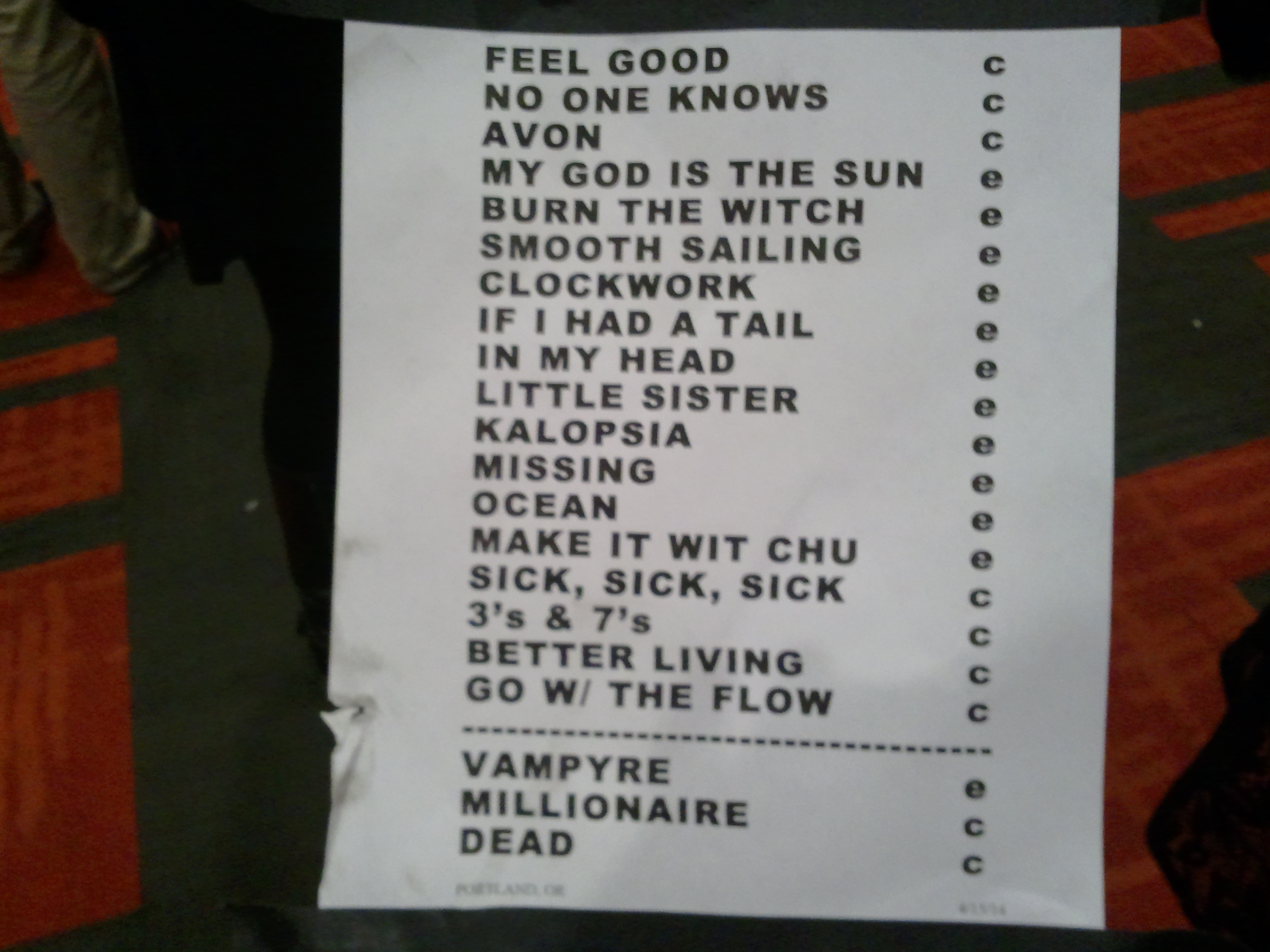
Queens kicked things off with a bang, perhaps buoyed by the announcement earlier in the day of their number 2 ranking in RIJR’s Album of the Year rankings, with the raucous “Feel Good Hit of the Summer”.  Few bands would then follow up their opener with their biggest hit, but QOTSA knew that the sold-out crowd didn’t come just to hear the songs they heard from the radio.  That’s what we call confidence, my friends.  After that, “Avon” brought a huge cheer from the fans who remember QOTSA’s self-titled debut with fondness.

The band then went on a run of material from their scintillating new album, …Like Clockwork.  By the end of the night, 80% of the album would be covered, and considering the excellence of the material, nobody minded missing out on a couple of old favorites.  The lead single “My God Is The Sun” serves as an excellent bridge between classic Queens desert-rock and the rest of the new album, with its catchy riffs and rolling drums interspersed with a groovy shaker rhythm.  However, it was what’s in my opinion …Like Clockwork‘s cornerstone “I Appear Missing” that was the highlight of the new material, with its intoxicating and hypnotic Gothic groove that you allow to drag you forward, even though you know it’s probably not a good idea.  The band did a brilliant job of extending the ending, as if caught in a trap with ever-escalating tension, matching the image of a man falling forever and ever from the sky.  As the band brought the volume down, the crowd watched the video screen and there was a moment that you thought perhaps the character would live to see a happy ending, but then the band snapped back with full force and that was the end for Our Hero.  It was but one of many examples of how QOTSA was able to improve on already-fantastic new material.

As the band neared the end of their main set, Josh Home dedicated Rated R‘s “Better Living Through Chemistry” to “his brother from a fucked-up mother”, former bandmate Nick Oliveri.  Nick played bass with the opening band, Moistboyz (who also featured another QOTSA collaborator in Mickey Melchiondo (aka Dean Ween)), and it was good to see further confirmation that he and Josh had patched things up.  The song itself was a perfect distillation of the greatness of Queens, and was one of the most mind-blowing performances that I could remember; in many ways, it was an inversion of many standard rock tropes, with epic breakdowns and solos.  Queens capped off the first part of the evening with the excellent “Go With the Flow”, leaving the crowd breathless but wanting more.

An amazing show even from these ridiculous seats.

An amazing show even from these ridiculous seats.

The band returned for their encore with the haunting “The Vampyre of Time and Memory”, featuring Josh behind the piano.  As the roadies wheeled away the extra piano, a familiar guitar riff came on, and the crowd went apeshit as they heard the opening to “You Think I Ain’t Worth A Dollar, But I Feel Like A Millionaire.”  Josh then brought Nick out on stage and handed him a mic, and Portland then witnessed Nick perform with Queens of the Stone Age for the first time in ten years as the crowd lost their shit a second time.  “Gimme toro, gimme some more!!!”  The band ended the evening with the live favorite “A Song For The Dead”, officially making it worth the wait since the band’s last stop in Portland several years ago.  And considering Josh’s lively interactions with the crowd and the several bits of praise he had for Portland (“You got yourselves a cool town…fuck it, you’re the best.”), hopefully we’ll be seeing him again soon.