It’s a holiday weekend, so it’s a fine time to catch up on some #longreads before heading back to work tomorrow.
Pitchfork had an interview with Sub Pop co-founder Bruce Pavitt about his new book of photographs documenting Nirvana’s 1989 European tour. It’s a great first-hand account of “the calm before the storm”, before everybody had an idea what grunge was or where Seattle was even located.
A different era of Nirvana
The Guardian has an excellent interview with Kim Gordon of Sonic Youth. It’s a wide-spanning interview, covering her early career with the band to her new work with Body/Head and other venues for her art. The end of her marriage to Thurston Moore and the breakup of Sonic Youth are still clearly sore subjects, so don’t read this expecting juicy gossip.
Stereogum has a ranking of the Elliott Smith albums from worst to best. I know it’s merely opinion, but let me say this: it’s just wrong (beyond the fact that there is no “worst” Elliott Smith album). Feel free to read it anyway, because it’s always good to talk about Elliott Smith’s work. The subject is definitely worthy of a TL;DR post later on, but here is the correct ranking, in order of increasing awesomeness:
7. New Moon
6. Elliott Smith
5. Roman Candle
4. Either/Or
3. From A Basement On The Hill
2. Figure 8
1. XO
And finally, Beck has a new album coming out next week. We’ll have a long review of his career so far later this week, but for those of you who don’t mind jumping the gun, NPR has a stream of Morning Phase available on their site. Also, it’s a good reminder to note that we have a Tumblr, because apparently that’s what kids do these days, where we posted the link earlier.
The National released one of the best albums of 2013 with Trouble Will Find Me. This is no surprise, considering the excellent run that the band has been on–this is now four straight classic albums for the band. Alligator, Boxer, High Violet, and now Trouble mark one of the greatest winning streaks in music history, and depending on the day you ask me, I’d rank any one of those as the band’s best work. And just like their albums, it’s hard to elevate any member’s contributions over the other. Everyone works together to make a cohesive sound, from the rich textures of the Dessners to the complex rhythms of the Devendorfs to the deep, expressive voice of Matt Berninger.
One of the great things about The National is the subtleties that reveal themselves over multiple listens. On the initial lesson, you get a general feeling that sure, this is pleasant, with only slight variations in tempo signifying the difference between the bittersweet quick numbers from the melancholic slower numbers. But with each successive listen, you get a better idea of the layers within each song, from different textures between instruments you didn’t pick up on the first time to certain dynamic swells that escaped notice the first time around. Most impressively, The National prove that intensity doesn’t have to mean “loud” and “abrasive”.
And then when you get an appreciate all the different layers of their songs, you begin picking up on the lyrics, and find a ton of memorable lines. The song “Pink Rabbits” is no exception, and there are several lines that stand out, ranging from the clever (“Now I only think about Los Angeles when the sound kicks out”) to the beautifully depressing (“You didn’t see me I was falling apart; I was a television version of a person with a broken heart”). It’s not just the individual lines of the song that are noteworthy, but the way that they are structured as well.
Again, this is a detail that becomes apparent after multiple listens, but there are several songs that The National have written that don’t employ traditional verse-chorus-bridge-chorus structures. There is the illusion of different choruses, but this is based more on melody and dynamics than a traditional structure. For the most part, “Pink Rabbits” relies on the same four chords, but different sections have the effect of a chorus because of either a build-up (two-chord sections, marked by the lyrics “And everybody was gone, you were staring down the street cause you were trying not to crack up) or by a quick simple repetition.
The effect of this is we get linear progress as we proceed through this particular story of heartbreak, with momentary glances back at the past. This is effectively complemented by the music which has a dragging rhythm as if the band is trying, but can only manage to trudge along. This reinforces the narrative of a person confronting all the emotions that come with seeing an old love once again, though circumstances have changed. The narrator is uncomfortable dragging up old feelings (“I’m so surprised you want to dance with me now, I was just getting used to living life without you around”) and feels bitter about encountering them once again (“You said it would be painless–it wasn’t that at all”).
There is a particular section where the particular melody line that Berninger matches up perfectly with the narrative. When he sings the section that begins “I was solid gold, I was in the fight”, the melody lifts up and is ascending. However, when the narrator meets the old love, the melody line begins to descend as he sings “I’m so surprised you want to dance with me now.” From this moment on, the mood has permanently shifted, and the emotions come bubbling up to the surface.
A few quick links you may have missed this week and worthy of your time this weekend
Chino Moreno is best known for his work as the vocalist for the Deftones, but he is definitely unafraid to branch out and work with other artists (Palms, Team Sleep). Now Chino has a new project called ††† (Crosses), and they released their debut album out this week. Chino gave interviews to SPIN and Rolling Stone, discussing his musical influences and other interesting stories including battles with labels over his career. For me though, the one piece of information that most intrigued me was finding out that Chino now lives in Oregon. If I ever see him around, I’ll be sure to welcome him.
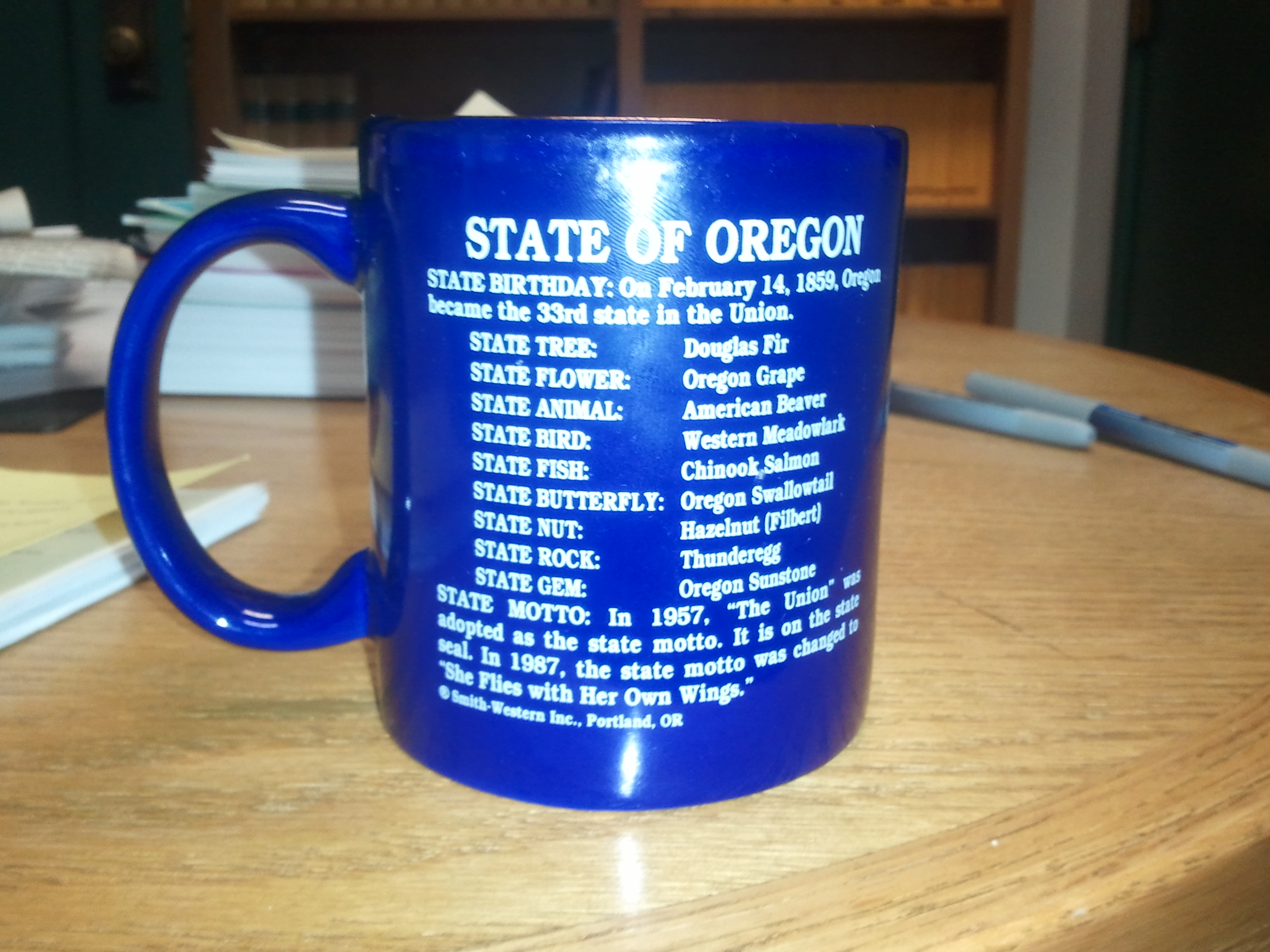
Happy Birthday Oregon!
Mark Kozelek has a new album out this week under his Sun Kil Moon moniker called Benji which is already drawing raves for both the evolution of his style and the stark, deeply personal lyrics. He did an interview with Pitchfork a couple of weeks ago, and you can read it here.
With the recent release of the new Broken Bells album After the Disco, this is as good a time as any for people to become even more familiar with the different projects of Danger Mouse. If you’ve listened to music in the last ten years, you’ve come across several songs produced by Brian Burton, aka Danger Mouse, and more likely than not own at least an album filled with his contributions.
If there is one thing that I can pinpoint as a signature of the Danger Mouse Sound, it’s the idea of the old made new again, or perhaps the retro in a modern context. This is not done in a showy or bombastic way–at no point in a Danger Mouse song is he calling to the listener’s attention THIS IS AN OLD STYLE/CONCEPT. There is nothing post-modern about his use of old styles, and certainly no ironic commentary. He’s not just throwing old records into a blender and spitting out reprocessed old music; you won’t find a dubstep version of a Hollies song, for example. Though he first got most people’s attention with his Jay-Z/Beatles mash-up The GreyAlbum, he’s moved well beyond throwing modern beats behind old soul samples.It’s much more subtle, which is why it’s worked so well over multiple iterations.
There are certain reoccurring elements that can be found in the Danger Mouse sound. The one that I usually pick up on is a certain bass sound–quick, staccato single notes, and often muted to dampen the sound a bit. There are also certain idiosyncrasies to his drumming/percussion, namely in his snare sound and his use of the ride cymbal, often matched with a late 50’s/early 60’s rock beat. And you are also likely to hear certain organ flourishes that give an additional color; it’s usually not a dominant sound, but present enough in the background that it is a significant part of the atmosphere of the song.
Danger Mouse hasn’t just been consistently excellent in the past decade, he’s been quite prolific. That means there are probably a few albums of his that you haven’t gotten around to listening to, or may not even have known existed. I mean, I was looking at this list and saw a few albums that I owned that I had no idea he had helped produce. It could just be confirmation bias speaking, but as I’ve listened to them in writing this article, I keep going, yeah, that definitely has that Danger Mouse sound.
One of those albums is The Good, The Bad & The Queen, which has unfortunately been forgotten about a bit over the years. It’s the rare super-group album that’s worth listening to (and it definitely is a super-group: Damon Albarn of Blur, Simon Tong of The Verve, legendary drummer Tony Allen, and holy shit Paul Simonon of The Clash). While each of the component parts are brilliant, they unite to create a singular album that is different than anything else they’ve ever done.
Another overlooked album is the debut of Electric Guest, Mondo. I’ve heard the single “This Head I Hold” a bit on the local alternative radio station, but it never made much headway nationally. It very much has the kind of groove found in Danger Mouse’s work with Gnarls Barkley, namely from the bass and from the classic pop-rock drums, just with a different singer.
Speaking of Gnarls Barkley, even though everyone knows their breakout hit “Crazy” and a lot of people picked up their debut album, their follow-up The Odd Couple never caught on like it should. There was no single track that stood out from the pack like “Crazy” did, but the album was stacked from top-to-bottom with fantastic songs. “Run”, “Going On”, and “Surprise” were all incredibly fun tracks filled with energy that should pack the dancefloor. “Blind Mary” was a bouncy track that managed the difficult task of being positive yet melancholic. And then there’s the devastatingly heart-breaking ballad, “Who’s Gonna Save My Soul?”, with it’s absolutely perfect video.
2008 was an absolutely banner year for Danger Mouse, creatively speaking. He had three of my top ten albums of that year, an honor that means absolutely nothing to most everyone. In addition to The Odd Couple, there was his work on Beck’s Modern Guilt and The Black Keys’s Attack & Release, albums which I will argue are among the high points of each artist’s careers. Beck is of course famous for shifting genres with each album, and he slides in smoothly into the Danger Mouse style. Beck always had a great touch in finding bits and pieces of old styles and repurposing them in modern contexts, so it should have been no surprise that he and Danger Mouse were simpatico.
The Black Keys were a different story. They had an easily identifiable trademark sound of ragged two-man blues/rock, and it was unclear how another element could fit in without disrupting that aesthetic. So often the production touches were at the margins or added for just little bits of color–a perfectly timed organ hit here, a little jazz flute there, etc. It was enough to push the group into new creative directions and eventually into greater commercial success. While some may grow tired of how The Black Keys have come to dominate rock radio today, I will always appreciate it when great songs like “Little Black Submarines” come on, even if they ruin some of its beauty by knocking out a whole verse and not allowing the song to properly develop (a rant that I will save for a later day).
It’s a lot better than being constantly subjected to Nickelback.
But perhaps the most interesting entry in the Danger Mouse discography is the project he did with composer Daniele Luppi, entitled Rome. It’s basically a soundtrack to a fake spaghetti western, and it’s really quite a blast. The album does a great job of mixing in instrumentals with more traditional “songs”, featuring Jack White and Norah Jones on vocals. In the end it fulfills the goal of any project like this: it makes you want to see the movie that would have this soundtrack.
If this has done anything, I hope it makes you at least somewhat excited when news of another Danger Mouse release comes out. And checking the calendar, you should be feeling that in approximately…three months. Enjoy.
It’s been amusing to read reviews of the new Broken Bells album, namely the amount of focus that multiple critics place on the name of the record. It brings to mind memories of middle schoolers putting together slap-dash book reports and riffing as much as they can on the title and back page in their oral presentations. It makes me wish that I had some social media pull to start a trending hashtag of #CrappyBookReports. I can understand how certain bands spend a lot of time and effort thinking that the album title really encapsulates what they were going for on the record, but you know, sometimes it’s just a convenient label (and just something taken from a particular song).
So, in other words, I’m not placing much stock in any grand statement in After the Disco.* Instead, I’m content to enjoy it as a pleasant 45 minute record of mid-tempo rock. The highs aren’t particularly high, and I wouldn’t say there’s a killer single hidden in the tracklisting somewhere, though “Holding On For Life” was enough of a hook to get me excited to actually buy the album.
One thing that the album does a great job is throwing enough curveballs that seemingly straight-ahead tracks usually in a place that you don’t expect. It makes for a great listening experience, but hell to figure out which song exactly it was that you were digging. Opener “Perfect World” starts with a great, motoring groove (almost a disco beat!), and then ends with a great half-time coda that brings the mood back down to Earth (maybe I should give critics more credit–they saw the album title AND listened to the first song). That said, songs where the tempo picks up like “The Changing Lights” and “Medicine” stand out a bit, but they never fully lift off. It’s most clear in the song “No Matter What You’re Told”–if there was just a little bit more urgency and just a couple more beats per minute (and a snare sound that was a bit more lively), this would be a great crowd-pleaser. But the restraint is clearly by design, so it’s difficult to pin all the blame on stylistic choices like that one.
The biggest problem is with the concept of “Broken Bells” itself. Both James Mercer and Danger Mouse have done excellent work on their own, but the combination of the two is puzzling at first glance, and there’s not really enough in their music to take away any potential doubts. Mercer already has an authoritative voice in The Shins and is a suitable vehicle for most of his musical ambitions; Danger Mouse has produced great tracks, but he could probably need a stronger vocal presence than Mercer. The music never really rises above its side-project nature; the whole is not greater than the sum of its parts.
But there is something to be said for just good music; bands don’t always need to justify themselves. In that respect, I’m perfectly content on buying Broken Bells albums and will probably continue to do so in the future.
*For the record, I always thought that After the Disco would have been a perfect title for the Yeah Yeah Yeahs’ It’s Blitz!
Coveredis a feature where we examine the merits of various cover songs, debating whether or not they capture the spirit and intent of the original, if the cover adds anything new, and whether or not it perhaps surpasses the original. If we fail on those counts, at the very least we may expose you to different versions of great songs you hadn’t heard before.
One of the highlights of Radiohead’s classic album In Rainbows was the song “Reckoner”. It may seem like a contradiction when I put it this way, but if I had to describe it, I’d say it was a beautiful, haunted, jazzy piece. The first instrument the listener hears is the super-clean guitars with their rich, bassy tone, a style used throughout In Rainbows but used to maximum effect here (I’ve quipped to friends before that it seemed that Radiohead forgot that there were other pickups on their guitars besides the neck pickup, but it works perfectly in this context). The stuttering rhythm of the beginning arpeggios are complemented by a shuffling drumbeat, which gives the song a right mix of propulsion as well as unease. The use of the ride cymbal also adds to the haunting quality, giving an instrumental haze through which Thom Yorke’s ethereal vocals filter in and out as he pleads in a gorgeous falsetto.
So it would seem like it would be difficult to match the greatness of this song, right?
I would say that while the original is a great song, I believe that the Gnarls Barkley cover surpasses it. The instrumentation is faithful to the original, right down to the tambourine part as played by Danger Mouse. One small difference is that instead of strings, the band opts for some distortion on the guitar, a substitution which works great in the live setting. But what sets this version apart from the original is the amazingly emotional vocal performance by Cee Lo. He gives this song all the passion that it didn’t even know it needed, turning Thom Yorke’s pleadings into a forceful demand. It’s a stunning, powerful performance, and is the key to what makes it one of the best covers I’ve ever heard.
***Side Note: I was actually at the concert in 2001 at The Gorge where Radiohead debuted an early version of “Reckoner”. It sounded pretty much nothing at all like the song we all know now.
Punk icon Dennis Lyxzén (Refused, The (International) Noise Conspiracy) has a new group called INVSN, and their sound is a bit different than what you would expect. Then again, if you expected synths and programmed drums, I would like to learn about the hallucinogenic substances you’ve been ingesting. But I like the sound, and Stereogum has the video for their song “61”.
I’ve been sticking around after The Daily Show and The Colbert Report to watch the show @Midnight. I’ve been switching between that and Community reruns, but lately I’ve been sticking around the reruns less often (though this may be the result of the syndication schedule not doing a great job of shuffling the episodes). I only bring it up here because Neko Case was a contestant on the most recent show; you can watch her Win The Internet here.
We usually don’t get much snow in the Pacific Northwest, and as a result we’re generally unprepared to deal with such unpleasantness. This means outside of a couple of hours of shoveling the driveway and taking a quick trip to the grocery store (and then getting the car stuck in the snow before making it up the last hill to my house), it’s been a stay-indoors-the-whole-weekend kind of time here.
This will not get plowed for days.
At least I’m taking advantage of the opportunity to watch one of my many music DVDs, and what better time to watch the documentary of Sigur Rós’s tour of their homeland of Iceland. The visuals of their countryside are stunning, and as one would expect with the majestic music of the band, so are the songs. The band comes up with many novel arrangements of their songs, ranging from their stunning light shows in Reykjavik to acoustic performances in the middle of nowhere. In addition, I also love seeing just how some of the most unreal sounds that the band makes on record are reproduced live.
I highly recommend buying it, but here’s at least the first disc.
A few quick links you may have missed this week and worthy of your time this weekend
I am of the generation that grew up in the wake of In The Aeroplane Over The Sea—not in the era from when the album was first released, but in the ensuing years where it became totem of alternative/indie rock culture. Like many, I became obsessed with the album and the story of Jeff Mangum, the reclusive genius who became the J.D. Salinger of rock. I was ecstatic when Jeff Mangum returned to the stage, and witnessed two amazing performances in Portland and Eugene (I remarked at the time that only Jeff Mangum could get a Portland crowd to scream “I love you, Jesus Christ!”). But even there was something that was missing from those performances, and that was the rickety junkyard orchestra quality of the album itself, provided by a full backing band. “Holland, 1945” will always be one of the greatest songs ever written, regardless of how it’s performed, but it loses something without those horns and that fuzz bass and those barely-restrained chaotic drums. So even though I had the good fortune to see those previous two performances, I still jumped at the opportunity to see Neutral Milk Hotel as a whole for the reunion tour.
There are those that express some reservations to this. Steven Hyden of Grantland wrote about his reaction to the return of Mangum and Neutral Milk Hotel, and he took a much more pessimistic stance. I do agree to some extent the cult-like devotion of some fans is a turn-off (while I have listened to the album over a hundred times, I haven’t memorized the entire lyric sheet as it seems most audiences have), but I wouldn’t go so far as to say as a result that I like the album “less”. And personally I think it’s unfair to call out any band for their possible motivations for reuniting, even if it’s to say that you don’t care that their intentions may be less than noble. I can see points being made about post-boomer generations now realizing how much fun it can be to indulge in nostalgia, this overlooks the fact that there were younger generations who never got a chance to experience things firsthand, so why piss on their opportunity to do so? I didn’t get a chance to see Dinosaur Jr. the first time around, but I’m sure as shit enjoying their late-period renaissance; Pavement was before my time, but seeing their reunion in Central Park was one of the greatest live performances I’ve ever seen.
* * * * *
Continuing our previous coverage of the 20th anniversary of Dookie, Consequence of Sound asked various writers and musicians about their memories of the album. What struck me is how many were my age at the time (around 9 years old), and led me to wonder whether any bands that are currently popular with 9 year olds will have any critical respect twenty years later. I’m going to say probably not.
Here’s an interesting article that details how useless it can be to talk about a musician’s social media presence. The number of followers and likes are generally useless figures, and discussion of those immaterial numbers take away from any discussion of the music itself. However, there’s a twist in this story of how exactly an artist gained all those Twitter followers.
One of my favorite weekends of the year is NBA All-Star Weekend, and this year will be especially great because I’ll be cheering for two Blazers. Kudos to LaMarcus Aldridge and Damian Lillard, the latter of whom will be the first player to participate in five events during the weekend. What does this news have to do with music? Just the fact that they’ve got an outstanding musical lineup for the weekend, with Kendrick Lamar performing before the Dunk Contest, Pharrell in the pre-game ceremony, and Janelle Monáe performing with Trombone Shorty, Dr. John, and Earth, Wind & Fire at half-time. That’s probably the best lineup that I remember for the event, if only for the fact that Phillip Phillips is not involved.
And finally, as the Winter Olympics begin, enjoy this video of a Russian Police Choir performing “Get Lucky” as a part of the Opening Ceremonies. I didn’t see much of the festivities, but I’m pretty sure this has to be one of the top highlights.
In recent years I developed a scientific but informal method to determining the best albums of the year. It’s scientific in its attempt at objectivity (number of plays over the year), but informal in that the order was only for the purpose of guiding friends as to which albums they would get the most bang for their back. For the year of 2011, this process determined that the self-titled debut of Cults was the fourth-best album of the year, while Yuck’s album (coincidentally enough, also a self-titled debut) took the crown at number one. Since then, I can honestly say those assessments hold up, since I continue to listen to those albums on a regular basis (in fact, if I re-ranked the list, I’d bump Cults up into the number two slot, close behind Yuck (sorry Girls and The Antlers)).
Is there a reason to pair these bands together, besides future narrative convenience? In a way, probably. As has been the case for most rock bands for over a decade now, both of these bands took their major inspirations from the past and offered their own reinterpretations of their favorite old bands. If you want to be mean, you could say the urge was not to push boundaries and create new genres, but to affirm a love of the old sounds that they had heard before, and hey what do you know, let’s try to do the same things ourselves. I myself don’t want to be mean, so don’t pin that accusation on me (others, however, have no problem whatsoever with this approach and react in a way that makes you want to ask if there’s anything you can do to console them, because it seems as if somebody in the band ran over their dog (possibly on multiple occasions)).
What distinguished Yuck and Cults from their colleagues was the era of their particular nostalgia. While several bands trafficked in 80’s revivalism (from post-punk to top-40 sounds) or hearkened back to 70’s arena rock, Yuck and Cults chose different routes: early-90s guitar-rock for Yuck and 60’s-era pop for Cults. After years of call-backs to Joy Division, Gang of Four, or God forbid, Led Zeppelin, critics at least would have a different set of bands to name-drop in describing each group’s sound (well, Dinosaur Jr. at the very least–that was the one that got the most references from what I’ve read for Yuck; I never saw too many specifics for Cults). But reminding me of some of my favorite bands only gets you so far; I was more than anything impressed with the execution of each band.
Take “Get Away”, the track that kicks off the Yuck album: the super-fuzzed-out rhythm guitar instantly catches your attention, and then the delicious lead guitar line, both in terms of melody and tone, kicks in through the mix with a circular riff that matches the song’s theme. But it’s the little moments that add up that make me truly appreciate the song: the excellent use of feedback as lead parts in the second verse, a post-chorus that truly builds on the chorus and leads perfectly back to the verse, and a bridge where everything drops out but a bassline reminiscent of the Pixies before everyone jumps back in for one last go-around. It’s early 90’s alternative done with an ear for perfect songcraft, and the only thing that’s infuriating is that the band members are even younger than I am.
For Cults, the comparisons are more general: the sunny nature of Madeline Follin’s vocals and the bright happy melodies do a lot to evoke an air of nostalgia, and bring to mind memories of Phil Spector and old-time girl groups like The Ronettes. It takes a lot to make this style seem like more than a gimmick, and over the course of an album Cults managed to do this successfully. There are subtle modern touches that provide enough of a twist to capture your attention, especially with the drum programming, and the seemingly carefree vocals mask lyrics that are more melancholic than expected. And I have to love a band that’s willing to do not only music videos, but videos that can be best described as “the director decided to get stoned and watch Lost Highway, and oh yeah, let’s make it a bizarre love story too”.
It’s easy then to imagine the excitement I felt when I learned that these two bands would be releasing new albums in 2013. I was excited to see what new influences the bands were willing to explore, or if they decided to stick with their old formula, that frankly sounded fine as well–it was a win-win as far as I was concerned. But soon after the announcements of the new albums, bad news followed: Yuck announced that lead singer Daniel Blumberg had left the band (and would record an album as Hebronix), and Brian Oblivion and Madeline Follin had broken up as a couple, but in both cases, new albums were going to be released anyway. This was just the kind of news that makes a fan more than a bit wary of what could possibly be released, or worry that there would even be a release at all.
Each banded handled the turmoil in different ways: Cults agreed to several interviews detailing the process of making their new album and providing further background of the romantic-but-not-band breakup, and Yuck just started releasing music. The first single after Blumberg’s departure that Yuck released was “Rebirth”, which is just too on-the-nose to not be something that was planned. It did signal a new influence for the band, as they seemingly had decided to switch their focus from American alternative-rock to British shoegaze, and it seemed that the band had internalized the latter style as well as they had the former on their debut. In a normal year, I would have said that “Rebirth” was the best My Bloody Valentine song released that year; since hell froze over and My Bloody Valentine actually released a new album last year, I would revise my statement and say it was the third or fourth-best MBV song of the year.
The Cults approach worked too, because at least with continued engagement with the press indicated that a follow-up was not a tossed-off effort, and that they were committed to continuing the band. And their choice of a teaser single took the opposite approach of Yuck: from a stylistic perspective, “I Can Hardly Make You Mine” would fit right in at just about any point in the track-listing of Cults, though there were some subtle differences in the instrumentation that pointed to some growth (synths that were higher up in the mix, a more dominant guitar part, and livelier drumming all pointed to exciting possible new directions for the album).
With these songs, optimism began to build up once again, and I gladly purchased Glow and Behold and Static as soon as they were released. I then went through my usual ritual, ripping the CD and importing the tracks onto my iPod (to be played during the next workout), and then putting the physical discs in my car (to be played on my next drive). And just as was the case with their debuts, my reaction to each album was that of near-instant love. Now here we are a few months later and both albums remain in my car as part of the regular rotation, and when I write up my review of the best albums of 2013, both albums should have a place on the list.
But apparently I’m in the minority with this opinion (well, a minority of a minority–we’re talking about indie bands that are somewhat obscure even by indie rock standards). While Static actually has a similar Metacritic score to Cults, it failed to generate as much press or buzz, and failed to appear on year-end lists at the same rate that I remembered that their debut did. And there was a huge nosedive in critical appreciation of Glow and Behold as opposed to Yuck. Another bad sign was the lack of local promotion for either of their shows in Portland, which is pretty amazing considering that the backstories for each album should be a hook for both critics and their subsequent audience. The articles practically wrote themselves.
At least with some critics, it appeared that some were unwilling to let go of the past. This is especially evident in AllMusic’s review of Glow and Behold, which can’t seem to accept the fact that the band decided to continue without Blumberg, and subsequently would not sound the exact same. It may be just that I personally found the increased emphasis on shoegaze to be a more interesting route to take than an attempt to ape Blumberg’s whine, or that I had fonder memories of Teenage Fanclub than others (when Yuck first came out, I remarked that it seemed like they were the one band that learned that Bandwagonesque was SPIN’s album of the year over Nevermind and seemed to agree with the result; the Teenage Fanclub influence was even more pronounced on Glow and Behold, with the album’s more focus on brighter melodies and cleaner guitars). It was the same case with the more negative reviews of Static, though in a way in reverse: reviews would say how there was little deviation from the first album, when there was an entire two-thirds of the album that had a darker mood and more challenging instrumentation than anything on the debut.
So it’s clear what my answer to the title question is, and for what it’s worth, the few of my friends that care about this sort of thing tend to agree. I’m fine with enjoying great songs like “We’ve Got It” and “Middle Sea” (a song that would be near the top of my list of best singles of the year) on my own, but I just hope that we won’t end up seeing more great bands like these two get caught up in the downswing of the hype-cycle, despite continuing to produce great music, as we’ve seen plenty of times before. In other words, when album number three comes out, I’ll be there.



 Rust Is Just Right